The starting ingredient
A whole or hulled seed is a particular plant ingredient. The word hemp does not make it a cannabinoid extract.
Field notes / A20 · The knowledge library
Do Hemp Seeds Contain CBD? Seeds, Seed Oil and CBD Labels
Hemp seeds do not naturally contain CBD. A hemp seed ingredient and a product that contains added or separately sourced cannabidiol should therefore not be treated as the same thing. Trace contact and ingredient naming explain much of the confusion.
Explore the distinction ↘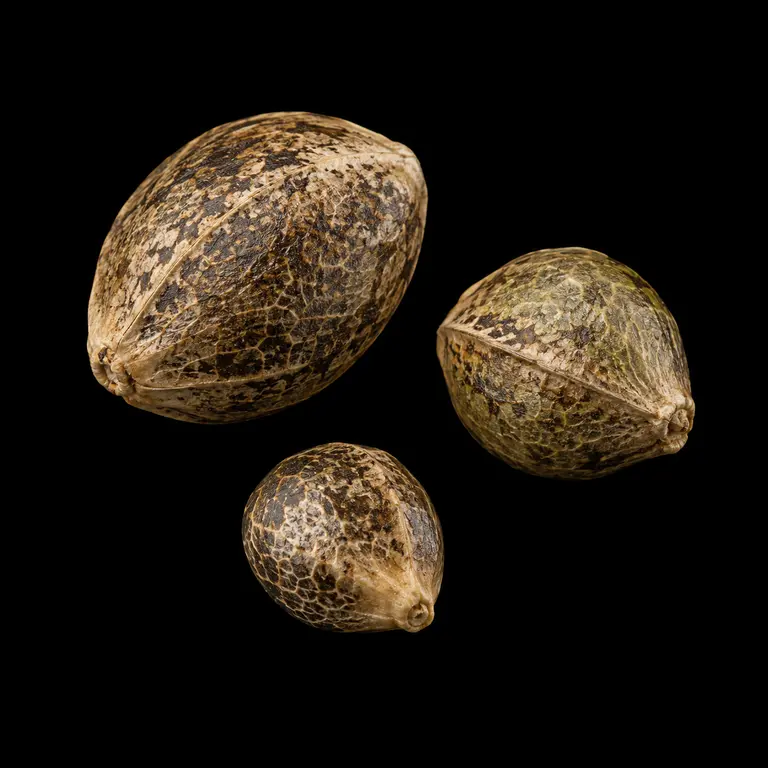
A whole or hulled seed is a particular plant ingredient. The word hemp does not make it a cannabinoid extract.
Hemp seed oil names an oil from seeds. That ingredient name does not declare a CBD amount.
A product can contain several ingredients. Its front label does not replace its ingredient list or a stated cannabinoid measurement.
In its evaluation of hemp seed-derived food ingredients, the FDA explains that seeds themselves do not naturally contain THC. The ingredients may contain trace amounts of THC and CBD picked up through contact with other parts of the plant during harvesting and processing. This describes incidental contact, not the seed as a natural CBD ingredient.
The distinction matters because two sentences can appear contradictory when their subjects are omitted: “the seed does not naturally contain CBD” and “a seed-derived ingredient may contain traces.” One concerns the seed’s natural composition; the other concerns material after contact and processing.
Neither statement supports assigning an exact CBD amount to an untested item. The clear answer to the everyday question is that hemp seeds are not a natural source of CBD, while a particular processed ingredient is a separate analytical subject.
| Description | What the wording identifies |
|---|---|
| Whole or hulled hemp seed | A seed food ingredient |
| Hemp seed oil | Oil identified as coming from seeds |
| Cannabidiol or CBD | A named cannabinoid ingredient or claim |
The European Commission describes hemp seeds as a food and feed resource, with protein, fibre and oils among their nutritional characteristics. This gives the seeds a meaningful ingredient identity without needing to describe them as a CBD product.
Hemp seed oil and CBD oil are not interchangeable names. The first specifies an ingredient source. The second is commonly used for a product presented as containing cannabidiol, which may include other ingredients. The actual composition needs to be read from the specific product description.
A fictional ingredient list might include both hemp seed oil and separately listed cannabidiol. In that case, the list is describing two contributions to a formulation. It does not establish that the cannabidiol originated naturally in the seed oil. This is an example of label interpretation, not a formulation instruction.
A shorter front label may omit the word seed or fail to distinguish a carrier ingredient from a cannabinoid claim. That is why the longer ingredient name matters. A front label, an ingredient list and a measured amount each contribute different information.
Consider two fictional labels. One says only “hemp oil”; the other lists “hemp seed oil” as an ingredient and identifies no CBD amount. The second is more specific about the oil source. Neither phrase alone supplies a numerical CBD result.
A percentage on a package could concern the proportion of seed oil in a blend, the amount of a named component or something else. Without its subject, the figure cannot answer a question about CBD. Always retain the words attached to the number when interpreting the claim.
For example, “contains 40% Example Oil” does not mean “contains 40% Compound X.” The fictional names make the logic easier to see: ingredient proportion and the concentration of a compound within that ingredient are different quantities.
The same applies to a ratio. A ratio between two compounds does not state how much of either is present in a container. The high CBD versus low THC comparison includes simple numerical examples of that distinction.
Questions, untangled
No. That is not their ingredient identity. The seed and a cannabidiol-containing product are different subjects.
Contact with other plant parts during harvesting and processing can account for trace cannabinoid presence. That is distinct from naturally identifying the seed as a CBD source.
No. Hemp seed oil names an oil by its source. A CBD-labelled product may contain multiple ingredients and requires its own description.
No. A named plant source does not supply a concentration. A numerical claim must identify what was measured or declared.
Yes, a label can identify separate ingredients. That does not make the two ingredient names synonymous or show that the CBD came from the seeds.