The reproductive structure
A flower and an inflorescence are different botanical units: an inflorescence is an arrangement of flowers. Informal descriptions often refer to the whole floral material as a bud.
Field notes / A04 · The knowledge library
Seeds in Cannabis Flowers: What the Observation Means
Seeds within cannabis floral material are connected with plant reproduction and seed development. Finding one is an observation about the material in front of you. It does not, by itself, reveal the full parentage, the source of pollen or the complete history of the sample.
Explore the distinction ↘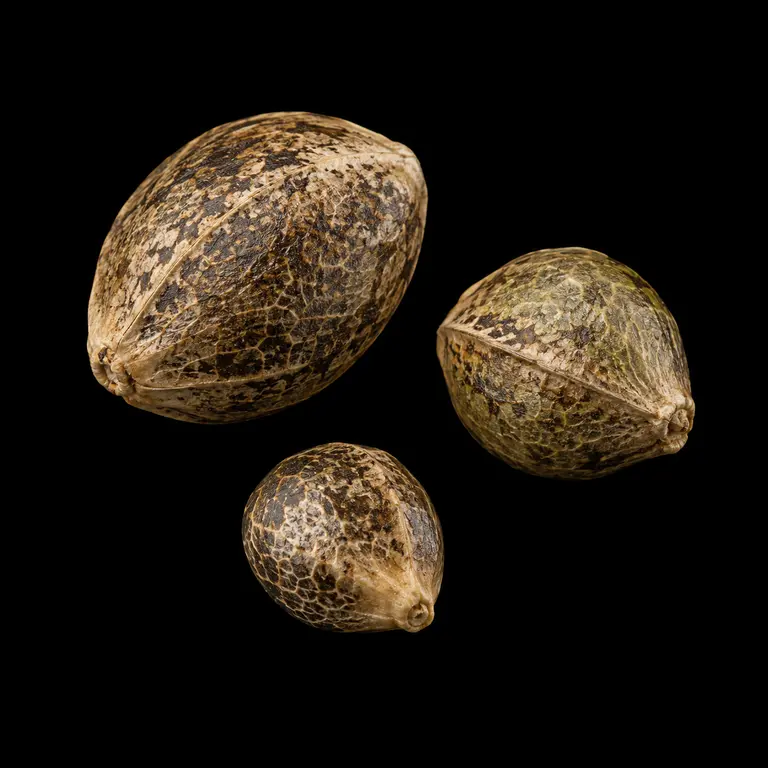
A flower and an inflorescence are different botanical units: an inflorescence is an arrangement of flowers. Informal descriptions often refer to the whole floral material as a bud.
Pollination concerns pollen transfer; fertilisation concerns the union of reproductive cells. These connected events are not interchangeable terms.
After fertilisation, an ovule can develop into a seed. The botanical account describes that transition rather than identifying every detail of the material’s ancestry.
Flowering plants reproduce through processes that include pollination, fertilisation and seed development. The terms identify different events. A useful explanation preserves those events instead of using pollination as a label for every later change.
The stigma is a pollen-receptive structure; the ovule is a different part of the reproductive system. An ovule can develop into a seed after fertilisation. These are anatomical and developmental relationships, not a procedure for producing seeds.
| Term | What it describes |
|---|---|
| Pollination | Pollen transfer to a receptive structure |
| Fertilisation | The union of reproductive cells |
| Ovule | A structure that can develop into a seed |
| Inflorescence | An arrangement or cluster of flowers |
The reproductive-biology reference provides the wider glossary. This article focuses on what an observed seed within floral material does and does not establish.
A seed within a sample does not carry a visible record of the pollen’s source. The reproductive history might be documented elsewhere, but it should not be invented from the finding alone.
Published cannabis research has examined inflorescences expressing both male and female characteristics and associated seed formation. That work shows why a simple assumption about the reproductive history is not a substitute for evidence about the particular sample.
The study does not establish that every seed found in floral material has that origin. It concerns the material and observations the authors examined. Applying its explanation to an unrelated sample would require additional evidence.
This is a distinction between a biological possibility and a documented history. A possibility can help explain the range of questions, while a history answers what occurred in identified material.
If floral material carries a strain name, that label identifies how the material was presented by its source. A seed found within it is a related observation, but the label alone does not establish both parents or every trait of the seed.
A description of the source material and a complete identity record for a seed are different records. Treating them as identical can turn a useful label into an unsupported claim.
| Statement | Evidence scope |
|---|---|
| A seed was observed | A finding in the stated material |
| The material had a name attached | A source or label attribution |
| Both parents are known | A separate ancestry claim |
| The seed has specified traits | A separate characteristic claim |
The genetics and strains guide explains names, reported parentage and genetic identity. The distinction matters especially when the record is incomplete.
An uncertainty about ancestry does not mean the object has no biological history. It means the available information does not establish that history. Clear writing should preserve the difference.
A photograph can document an apparent seed within floral material. Its value depends on its subject and caption. It should not be treated as an automatic record of genetic identity, biological condition or the circumstances before the picture was taken.
A generic illustration has a different role. It can introduce the subject without documenting any actual finding. The image on this page is illustrative and is not presented as a sample of seeded floral material.
The same discipline applies to appearance terms. A patterned or smooth surface is a visible description. A conclusion about viability or future characteristics is an additional claim, not a different way of describing the same pattern.
The appearance reference defines surface vocabulary. The quality-evidence article explains why a visible finding and an assessed biological property are distinct.
A scientific paper, a specimen caption and an informal description can all discuss seeds in flowers while supplying different kinds of evidence. A paper may examine a defined set of samples; a caption may record one view; a casual account may simply report a finding.
A useful summary should not strengthen the claim during retelling. If the source says a seed was present, a later summary should not add verified parentage or a measured characteristic that the source never established.
Nor does a finding in one sample automatically describe an entire named variety. The individual observation, the sample and the broader category are different levels. Keeping that hierarchy visible is part of reading the account accurately.
For the wider vocabulary of seeds and records, return to the general cannabis seed guide. The question here is the biological meaning of an observation, rather than a method for producing, selecting or using the seed.
Questions, untangled
No. Pollination concerns pollen transfer, while fertilisation concerns the union of reproductive cells.
Not by itself. The source of pollen is part of a reproductive history that needs separate evidence.
No. A label on the source material is not a complete ancestry record for the seed.
No. It is a generic botanical illustration, not a specimen record.
Appearance alone is not a complete assessment of a biological property. Any such claim needs evidence that addresses it.
Early female floral features · Pollen sacs and floral anatomy · Why female cannabis plants can contain seeds