The meaning of feminized
The word refers to the expected female sex associated with a seed category. It does not describe an absence of reproductive structures.
Field notes / A12 · The knowledge library
Can Feminized Plants Produce Seeds? Female Does Not Mean Sterile
Yes. Plants from feminized seeds can form seeds. Feminized concerns a sex-related seed category; it is not a synonym for sterile. Whether seeds are present in particular material is an observation about that material, rather than something the category word settles on its own.
Explore the distinction ↘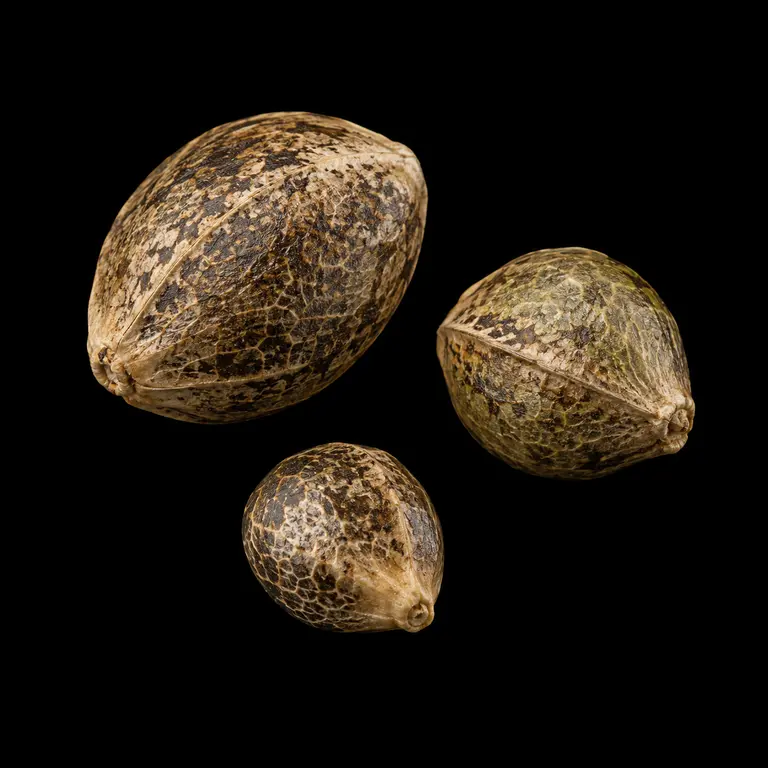
The word refers to the expected female sex associated with a seed category. It does not describe an absence of reproductive structures.
The ability to form seeds is different from a statement that seeds will be present in every individual.
A record of seeds in flower concerns observed material. A seedless sample is also an outcome, not automatically evidence of sterility.
The phrase feminized plant is commonly used to mean a plant originating from a feminized seed category. It should not be read as the name of a separate sterile botanical class. The category and the reproductive question concern different characteristics.
In the general botanical account, seed formation involves female reproductive structures. Female therefore cannot be treated as an ordinary synonym for incapable of forming seeds. The confusion arises when a sex description is made to carry an unstated claim about fertility.
A precise explanation can answer yes without turning it into always. A biological possibility is not a prediction that every plant, flower or sample will contain seeds. The verb in the question matters.
| Term | Subject |
|---|---|
| Female floral structure | A sex-related anatomical description |
| Pollination | Pollen reaching a receptive floral structure |
| Fertilization | The reproductive event preceding ordinary seed development |
| Seed formation | Development of the resulting seed |
| Sterility | An inability to carry out a reproductive function |
The Canadian Food Inspection Agency’s biological overview provides the wider reproductive context. These terms help explain the subject, but they do not identify exactly what happened in a particular undocumented case. A glossary and an investigation have different purposes.
Research by Punja and Holmes documents seed formation alongside varied floral morphology in cannabis. It provides evidence that floral descriptions and reproductive outcomes require careful wording. This article draws on that biological context without providing procedures for producing seeds.
A photograph of a seed-containing flower, for example, may document an appearance. Identifying the complete reproductive history of the material would be a separate task. The image should not be asked to answer more than it records.
No seeds are reported in the material described. This observation belongs to that sample.
This describes reproductive inability. An absence of seeds alone does not establish that inability.
The same logic works in the opposite direction. A record of seeds in one sample does not state that all material from the category will have the same outcome. Both presence and absence need to stay attached to the subject that was examined.
Finding a seed and identifying its ancestry are different questions. The location of a discovery is useful context, but it is not a complete record of every biological contribution involved. A strain name attached to the surrounding material adds an attribution rather than a full identity assessment.
This is why the informal term bagseed should remain a discovery description. It does not itself establish a sex category, flowering response or complete pedigree. Read what bagseed means for that vocabulary.
“Are feminized seeds always female?” concerns the scope of a sex-category claim. “Can plants from them form seeds?” concerns capacity. “Why were seeds found in this particular material?” asks for an explanation of an event. The second question does not answer all of the third.
This page answers the capacity question. For the category wording, see are feminized seeds always female? For the broader observation, read seeds in cannabis flowers.
The feminized knowledge guide connects these articles to the main definition. They are separate pages because category, possibility and a particular observed event require different explanations.
Questions, untangled
Yes. The feminized label does not establish sterility.
No. Capacity is different from an outcome guaranteed in every individual.
No. An absence of seeds in described material is not the same statement as an inability to reproduce.
No. The discovery context is not a complete ancestry record.
The feminized seed guide explains the category and connects it to regular and autoflower terminology.