Age is a date calculation. Longevity is a biological question. Explore what storage records, scientific terminology and shelf-life claims can tell us—and why those pieces belong together.
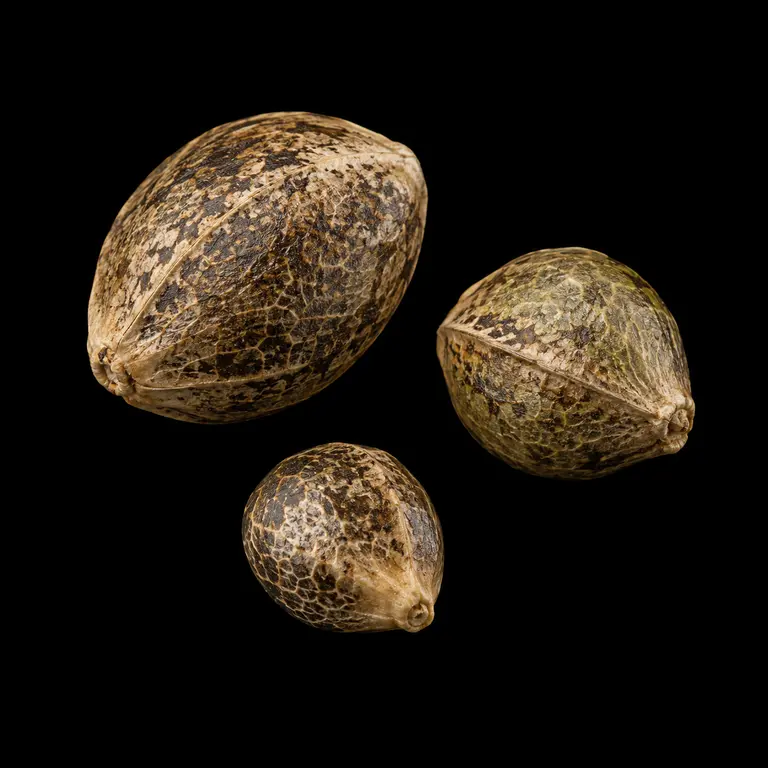
Botanical illustration · not an age comparisonBeyond the date.
01 / Read the whole timeline
Three dates. Three different meanings.
A date becomes useful when the event behind it is clear. Choose a stage to highlight its explanation. This is a conceptual record, not a countdown or a prediction of seed survival.
01 / The starting record
Which event started the clock?
A collection date, a receipt date and the date a record was created describe different events. If only one is known, name it accurately. Receiving material in September does not establish that it was produced in September.
02 / The packaging record
A new label is not a new age.
A packing date documents when material was packaged. Repacking or transferring an item can create another administrative date without changing its biological history. A useful record keeps the original reference connected to later entries.
03 / The assessment record
A result belongs to its moment.
A dated report describes an assessment made at a particular time and within a defined scope. It is not automatically a statement about the material today. Its sample reference matters just as much as the date printed beside the result.
∞
02 / Biology, not a stopwatch
Ageing happens inside.
Seed-ageing research describes deterioration of cellular components, including proteins, lipids and nucleic acids. A seed can keep a recognisable exterior while changes occur within it.
The scientific review Seed Longevity—The Evolution of Knowledge and a Conceptual Framework connects such deterioration with declining metabolic capacity. This is a general explanation of seed biology, not an assessment of the illustrated seeds.
A few terms. Much less confusion.
Storage
The circumstances in which material is held over time. The word describes a process or history; by itself it does not tell you whether a biological property has been retained.
Longevity
The duration over which seeds retain viability. It is a property studied in relation to particular material and circumstances, rather than a universal number printed into a cultivar name.
Viability
A biological capacity, distinct from the appearance of a dry seed. A statement about viability needs a defined basis; an attractive surface photograph does not provide that basis on its own.
Dormancy
A living seed’s germination can be constrained by dormancy. Seed-physiology research treats dormancy and loss of viability as different questions. The everyday word sleeping can obscure that distinction.
The review Why Seed Physiology Is Important for Genebanking discusses the importance of distinguishing dormant from non-viable material. Its scope is scientific collection management. These definitions explain the language; they do not establish the condition of a particular cannabis seed.
03 / Making sense of shelf life
Why one number is not the whole answer.
Kew’s account of seed-life-span research describes substantial differences among species and storage environments. Extraordinary examples of ancient seeds are interesting precisely because they are exceptional. They should not become a default expectation for another species or an undocumented sample.
For cannabis seeds, the general scientific lesson is about the limits of comparison: a result for another plant species is not a ready-made expiry date. Equally, a reported result for one lot should not be extended to every item carrying the same commercial strain name.
What a shelf-life statement needs to explain
Question
Why it matters
Which material?
A species, variety, lot and individual specimen are different levels of identification.
Starting from when?
Collection, packaging and assessment dates do not mean the same thing.
Which property?
Appearance, identity and biological performance are separate claims.
Under what circumstances?
A study’s stated context is part of its result, not an optional footnote.
What evidence?
An observation, laboratory result, statistical estimate and promise have different foundations.
An estimate is not an individual deadline.
A population statistic summarises a group. It does not identify the exact lifespan of each member. In its research account, Kew discusses half-life as the time at which half a seed population has died. That is a study measure, not an instruction to assign the same expiry date to every seed in a packet.
This distinction is useful beyond biology. An average journey time does not tell you the arrival time of every traveller. In the same way, a summary of a collection cannot answer every question about a particular specimen. Look for what the statistic actually represents before turning it into an individual prediction.
The label carries a second kind of value.
A preserved object can lose much of its documentary usefulness if its identity becomes detached from its record. In a scientific collection, knowing what material represents is a separate concern from knowing its biological condition.
The Crop Genebank Knowledge Base emphasises documentation in monitoring collections. That supports a useful reading habit: follow the connection between the object, its reference and the sequence of recorded events. A name without that connection is less informative than a name linked to an identifiable record.
IDENTITY
A stable reference.
A lot or specimen identifier connects entries that refer to the same material. It helps distinguish a change of label from a change of subject.
HISTORY
Events with meaning.
Each date should say what happened. A receipt, transfer or assessment can be part of the history without being mistaken for the original collection date.
SCOPE
Claims with boundaries.
A record should identify whether a statement concerns an individual item, a sample or a wider lot. Those scopes should not be silently merged.
These are principles of documentary clarity. They do not turn a record into proof of every claim it contains. A complete-looking label still needs an identifiable source, and any quoted result should remain connected to the report that produced it.
04 / Read between the dates
Three examples. Better questions.
The following scenarios are fictional. They illustrate how to interpret information, rather than evaluate actual seed lots.
“Packed this month.”
A packet looks new and carries a recent packing date. That tells you when it was packaged. It does not, without another record, tell you when the material was originally collected or how it was held before packaging.
“Lasts for years.”
A description gives a lifespan without identifying the material, starting point or measured property. The phrase is incomplete as a scientific claim. A more useful account would state what the duration refers to and what evidence supports it.
“It still looks the same.”
Two photographs appear similar despite being taken at different times. They document an exterior appearance, subject to lighting and viewpoint. They do not show every internal change described by seed-ageing research.
“A study found…”
A quotation reports a result but leaves out the species and research setting. Return to the original paper before applying it elsewhere. The missing context may be the most important part of deciding whether the comparison is meaningful.
Questions, untangled
Time, labels and limits.
Is there one fixed shelf life for all cannabis seeds?+
This guide does not assign a universal lifespan. A defensible statement needs material-specific evidence and a clear definition of the circumstances and property being discussed.
Does a recent packing date mean recently produced seeds?+
No. It identifies the packaging event. A production or collection date is a different piece of information.
Does dormancy mean a seed has died?+
No. Dormancy and loss of viability are distinct concepts in seed physiology. The terms should not be treated as synonyms.
Can a photograph show the complete storage history?+
A photograph can document appearance at a moment in time. Provenance and dated records are needed to describe a history; internal biological properties require their own evidence.
Where does appearance fit into this topic?+
Our seed appearance and quality guide explains visible structure, image interpretation and quality terminology. It complements this guide’s focus on time and records.
Read the packaging, too.
Our containers and labels article explains packaging terminology, collection references and the difference between a container claim and a claim about its contents.