The male floral description
Staminate refers to flowers with stamens, the male reproductive structures. Anthers are the pollen-bearing parts of stamens.
Field notes / 17 · The knowledge library
Male and Female Cannabis Plants: Reproductive Biology Explained
The botanical distinction between male and female cannabis concerns reproductive structures, not a universal difference in ordinary leaf shape. This article explains flower terminology and reproductive organisation, including why a simple two-column label cannot capture every form of sex expression.
Explore the distinction ↘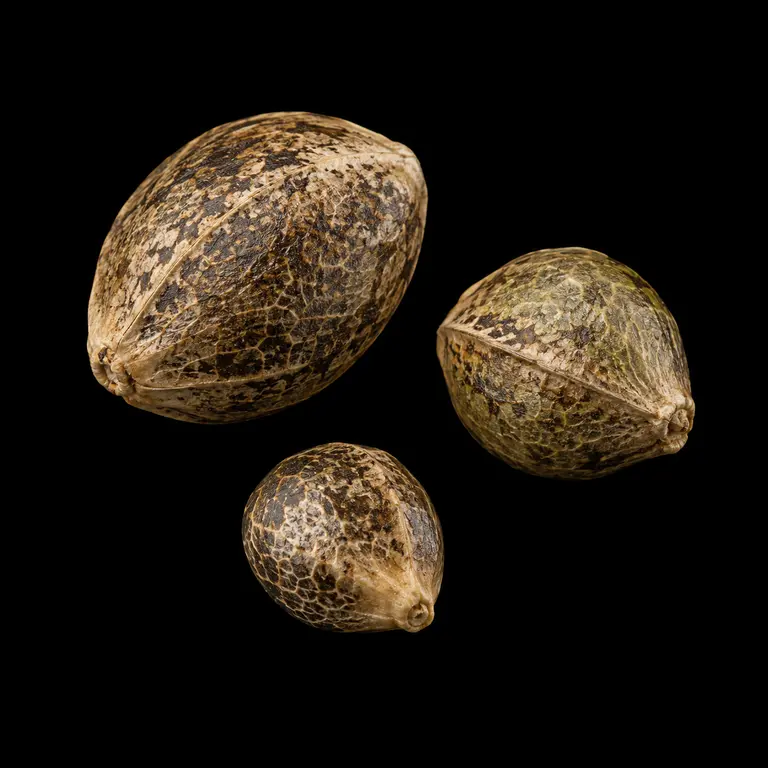
Staminate refers to flowers with stamens, the male reproductive structures. Anthers are the pollen-bearing parts of stamens.
Pistillate refers to the female reproductive structures. The stigma is the pollen-receptive part; an ovule is a different structure within the reproductive system.
Dioecious describes male and female flowers on separate individuals. Monoecious describes male and female flowers on the same individual.
Botanical language identifies parts and their relationships. A flower, a cluster of flowers and a leaf associated with a flower are different structures. Captions that collapse them all into a single informal word can hide the distinction.
| Term | Botanical meaning |
|---|---|
| Stamen | A male reproductive structure of a flower |
| Anther | The pollen-bearing part of a stamen |
| Stigma | A pollen-receptive structure |
| Ovule | A structure that can develop into a seed after fertilisation |
| Inflorescence | An arrangement or cluster of flowers |
| Bract | A modified leaf associated with a flower or inflorescence |
These definitions explain the vocabulary used in botanical sources. They are not a field procedure for sorting plants or a recommendation about cultivation. Their purpose is to make an anatomical description understandable.
A bract and a flower can occur close together while remaining different botanical units. The proximity visible in a photograph does not make the words interchangeable.
Dioecy concerns reproductive organisation across individuals: male and female flowers occur on separate plants. Monoecy concerns their occurrence on one individual. Neither term simply describes how a single leaf looks.
The Canadian Food Inspection Agency’s biology document discusses reproductive biology within the broader description of Cannabis sativa. Its scope includes variation across the species, rather than a universal visual stereotype for every named cultivar.
The word hermaphroditic also appears in cannabis research. Authors may use it when describing the occurrence of male and female reproductive characteristics within the material they examine. The source’s stated subject matters: a flower, an inflorescence and a whole plant are different levels of description.
A precise summary preserves those levels. If a study describes anthers within a particular floral arrangement, its finding should not be rewritten as a claim that every individual in the species has the same arrangement.
Research describes sex chromosomes in dioecious cannabis, with females generally XX and males generally XY. A chromosome description concerns genetic information. A description of floral structures concerns expressed reproductive characteristics.
A 2020 study examined cannabis inflorescences with both male and female characteristics. Its observations included anthers associated with otherwise female floral structures. This is an example of why genetic terminology and the observed reproductive form should not be treated as identical kinds of information.
A separate study of female cannabis architecture examined the development and arrangement of flowers. Its anatomical focus illustrates how a detailed botanical account can explain structures that a broad male-versus-female heading leaves unnamed.
Together, these sources make the subject more nuanced without making the basic glossary unusable. The terms remain useful when their scope is clear. The problem arises when an introductory label is treated as a complete description of all biological variation.
A photograph may clearly show leaf shape while showing no reproductive structures. The image can support a description of that leaf. It does not thereby support a detailed account of flowers that are outside the frame or absent from the record.
Similarly, a generic illustration can introduce a subject without documenting a male or female specimen. The illustration on this page carries no sex assignment. It is not presented as a side-by-side diagnostic comparison.
| Visible subject | Appropriate descriptive scope |
|---|---|
| A leaf | Its visible outline, divisions or margin |
| A documented floral close-up | The structures actually shown and identified by its source |
| A labelled specimen image | The image together with the supporting specimen record |
| A generic illustration | The concepts it is explicitly intended to illustrate |
This does not mean images are uninformative. It means the conclusion should match what they document. A useful caption states the subject, identifies the image type and retains the source of any anatomical labels.
An image can also be correctly labelled because its author has a specimen record that the reader cannot see. That label communicates the record; it does not automatically prove that any similar-looking image could be classified without context.
A dry seed image and a floral anatomy image address different stages and structures. Evidence about flowers should not be repurposed as a rule for identifying sex from seed-shell markings. Our male or female seed article explains that distinction.
Category labels add another layer. Feminized and regular describe how seed material is presented in relation to sex-related outcomes. They are not alternate names for a particular leaf outline or an image style.
For the early plant vocabulary, see cannabis seedling appearance. That article discusses cotyledons and true leaves, keeping young foliage separate from reproductive anatomy.
These connected articles follow a single reading principle: name the structure or category being discussed, then keep the evidence attached to that subject. That produces a clearer botanical account than relying on a visual stereotype.
Questions, untangled
The botanical distinction concerns reproductive structures. An ordinary leaf image should not be treated as a complete reproductive record.
Male and female flowers occur on separate individuals. The term describes reproductive organisation across plants.
Male and female flowers occur on the same individual. It is a different arrangement from dioecy.
No. An anther is pollen-bearing; a stigma is pollen-receptive. They name different structures.
Not by itself. A claim about seed appearance needs evidence about that specific relationship, rather than a citation describing flowers.
The wider context
Explore the central cannabis seed knowledge guide for an overview of biology, labels and related reading.
Early female floral features · Pollen sacs and floral anatomy · Why female cannabis plants can contain seeds