What the label is intended to convey
Feminized concerns the expected female sex of plants from a seed category. It does not describe the seed’s colour or surface pattern.
Field notes / A11 · The knowledge library
Are Feminized Seeds Always Female? Expectations and Sex Expression
Feminized seeds are intended to produce female plants. The label should not be expanded into an unconditional promise about every individual and every form of floral expression. The useful distinction is between the purpose of the seed category, the results observed in a sample and the wording of a guarantee.
Explore the distinction ↘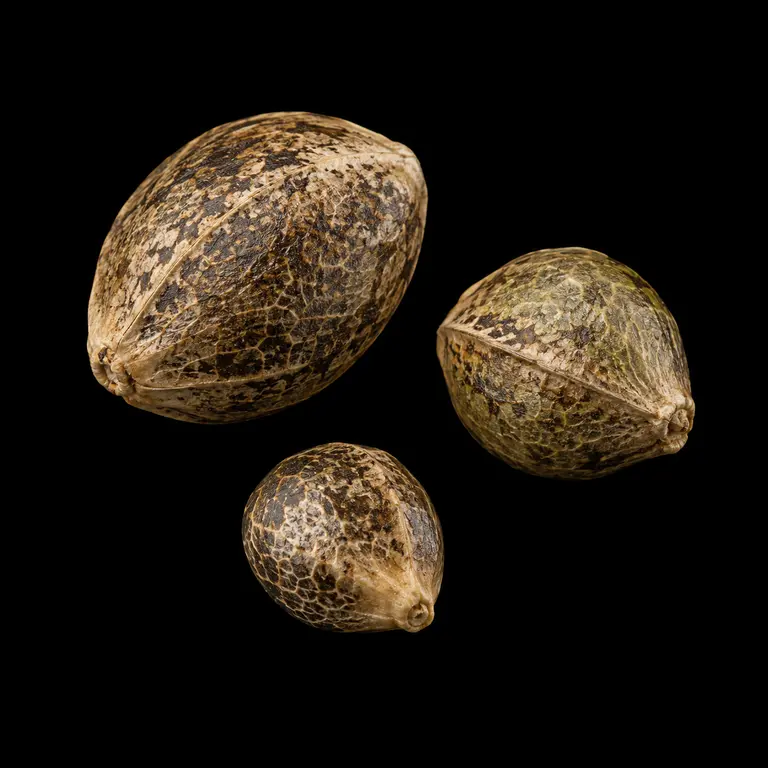
Feminized concerns the expected female sex of plants from a seed category. It does not describe the seed’s colour or surface pattern.
A finding about individual plants or a sample has a defined subject. It is different from a claim about every seed carrying a label.
Always and every make a claim broader. They should not be silently added to a shorter category description.
Feminized is a sex-related seed category. It describes the expected female outcome, rather than a seed’s visible appearance.
Always extends the claim to every individual and circumstance. That stronger statement needs its own evidence; the category word alone does not establish it.
Adding always changes the question. Instead of asking what a category means, it asks whether there can be any exception to a broader assertion. A careful answer keeps that change visible, rather than treating an absolute word as a harmless decoration.
The biological literature distinguishes sex-related genetic descriptions from the floral structures that are expressed. Cannabis can exhibit more complex patterns than an everyday account of separate male and female plants suggests. Punja and Holmes document this complexity in their work on floral morphology.
This is why one word should not be made to answer every question about a plant. A seed-category label, a genetic description and an observed floral structure refer to different levels of information. A useful report identifies the level it is discussing.
The distinction does not mean that the term feminized has no meaning. It means its meaning should remain specific. It is possible to explain the expected category clearly while also avoiding an unsupported claim about all future observations.
A percentage without its subject can create an illusion of certainty. Does it describe an expected result, a measured group, a published experiment or the terms of a source’s own claim? These are different uses of a number.
Consider a fictional report saying that every individual in a small examined group met its stated criterion. That is an observation about the group. It is not logically identical to a guarantee about all material from every source. Increasing the scope of the sentence requires more than repeating the same percentage.
A clear account should preserve the size and identity of the group when available, as well as the criterion used for the count. This is a general principle of interpreting evidence; it does not assign a success rate to any seed lot on this website.
| Wording | Type of information |
|---|---|
| Described as feminized | A category attribution |
| Recorded in an examined sample | An observation with a defined subject |
| Guaranteed in every case | A broader absolute claim requiring its own basis |
The same care applies when reading an anecdote about an exception. An account involving one individual does not establish a frequency across all material. It may raise a question, but it cannot by itself supply the population-level answer.
Conversely, a broad category label is not a reason to erase an observation. The report and the label belong to different parts of the record. Keeping both accurately described is more informative than deciding that either one must automatically invalidate the other.
Female does not mean sterile, and feminized does not mean autoflower. The first confusion mixes sex description with reproductive capacity. The second mixes sex category with flowering response. Each deserves its own answer.
Read can feminized plants produce seeds? for reproductive capacity. The autoflower versus feminized comparison explains the flowering distinction.
For the wider category, return to the feminized knowledge guide. It provides the starting definition, while this article focuses on the extra meaning introduced by always, percentages and claims about individual outcomes.
Questions, untangled
No. The category is intended to convey an expected female outcome.
No. A numerical claim needs its own source, subject and definition. This page does not assign one figure to every lot.
No. One is an observation of particular material; the other is a category description. The distinction matters when reading a report.
No. An individual account cannot by itself supply a rate across a wider population.
No. Reproductive capacity is a separate question, explained in the linked seed-formation article.