What is the object?
An everyday seed description and a botanical account may use different words for the same small structure. Anatomy explains what the object contains and which outer tissues are being described.
Field notes / H01 · The knowledge library
Cannabis Seeds Explained: A Guide to Biology, Types and Terminology
Cannabis seeds can be described as biological structures, named material, category examples or subjects of a scientific report. This guide brings those viewpoints together and directs each question to the part of the knowledge library that explains it in depth.
Explore the distinction ↘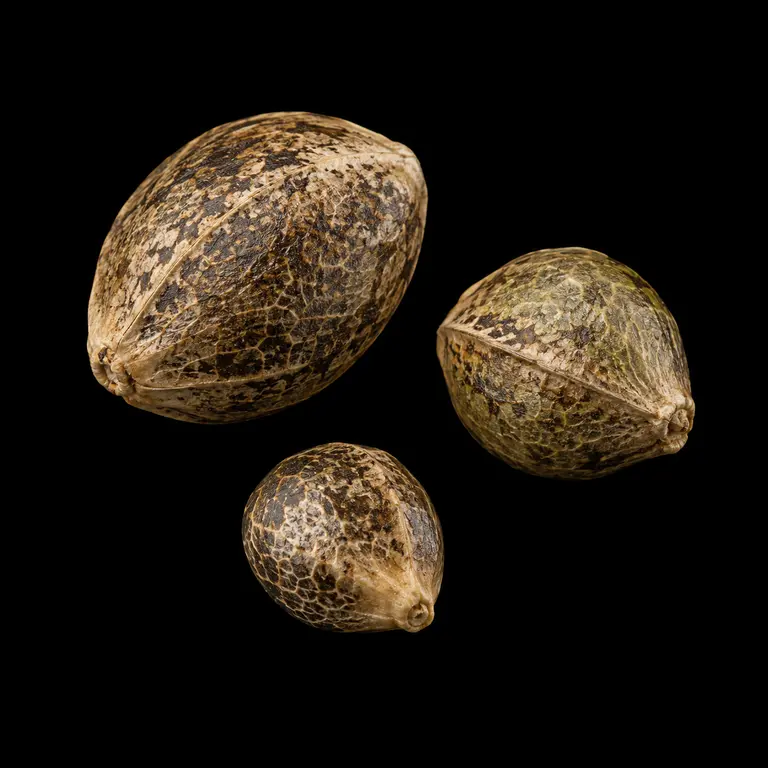
An everyday seed description and a botanical account may use different words for the same small structure. Anatomy explains what the object contains and which outer tissues are being described.
Feminized, regular and autoflower are not three equivalent descriptions. Some concern sex-related categories, while others concern flowering response.
A photograph, a category label and a laboratory report answer different questions. Useful information identifies its subject and the claim it can actually support.
Kew describes an embryo, reserves and a protective coat as common features of flowering-plant seeds. The embryo is the developing young plant. The reserves and surrounding tissues belong to a structured biological package, rather than an empty shell.
In cannabis, the whole unit commonly called a seed is botanically an achene, a small fruit containing a seed. This explains why flora descriptions may refer to a fruit wall when describing an object that a catalogue calls a seed.
Different words can therefore reflect different levels of anatomical precision. A general caption can use seed without being a full botanical account. A technical source should retain its more precise terms when the distinction matters.
| Term | What it describes |
|---|---|
| Embryo | The developing young plant within the seed |
| Seed coat | A protective tissue around the seed |
| Achene | The small fruit unit commonly called a cannabis seed |
| Fruit wall | The outer fruit tissue described in botanical accounts |
For a closer reading of outline, markings and surface terms, visit the visual appearance reference. For the wider relationship between visible features and quality, use the appearance and quality guide.
Feminized concerns an intended female outcome. Regular is a sex-related category not designated feminized. Autoflower concerns flowering response rather than the sex-related category. Two labels from different dimensions can occur in one description.
For example, feminized autoflower combines two pieces of information. It is not a contradiction and does not describe a third biological sex. The words answer different questions about the material.
| Dimension | Examples | Question |
|---|---|---|
| Sex-related category | Feminized, regular | How is the material presented in relation to sex-related outcomes? |
| Flowering response | Autoflower, photoperiod-sensitive | What response category is described? |
| Identity | A named cultivar or source reference | Which material does the account concern? |
A name such as White Widow belongs to identity and source context. It does not replace the other fields. A category word likewise does not establish the complete history of a named strain.
Read the definition guides for feminized seeds and autoflower seeds. If the labels themselves are the point of confusion, the autoflower versus feminized comparison puts the two questions side by side.
Germination, emergence and seedling development are connected concepts, but they do not name an identical instant. Physiological accounts commonly use emergence of the embryonic root as a germination endpoint. Later leafy development belongs to another part of the story.
A single illustration can symbolise the whole transition. It should not be treated as a dated specimen or an exact account of anatomy unless its source establishes that purpose. Captions help the reader understand the role of the image.
The germination knowledge guide introduces the biological terms. The article on emergence and timing explains why an interval needs named events. The seedling reference distinguishes cotyledons from true leaves.
These pages are botanical explanations. They do not turn the library into a growing calendar: a stage name is not a predicted date, and a response category is not a complete set of conditions.
Material can have a physical history and a documentary history. A photograph records a view; a label connects an item to a description; a report records an assessment within its stated scope. Those roles become more useful when they are connected by an identifiable reference.
A collection date, a packing date and an assessment date describe different events. Replacing a container does not create a new biological origin. Likewise, copying a description to another page does not establish that it concerns the same sample.
The storage and shelf-life guide explains this relationship between time and records. Its companion on containers and labels focuses on what packaging language actually establishes.
Consider a fictional archive containing two boxes with the same display name. The shared name may identify a broad category, but a unique reference is what connects each box to its own record. A familiar word alone should not erase that distinction.
A phrase such as good seeds can concern appearance, identity or a reported biological property. The adjective alone does not tell the reader which question has been answered. A useful account names the property, the subject and the evidence.
A percentage also needs a heading. A proportion reporting one property does not describe every other characteristic. A sample result should remain a sample result when summarised; it should not quietly become a guarantee about each individual item.
Our quality-claims article explores fictional examples of vague and precise descriptions. The goal is not to make ordinary reading complicated, but to prevent a polished image or an attractive label from doing the work of missing evidence.
The same discipline applies to sources. A scientific paper establishes findings about the material and question it studied. Extending that finding to another species, cultivar or product is an additional claim, rather than an automatic consequence of using the same keyword.
For the meaning of a category, begin with a definition guide. For the relationship between two terms, use a comparison. For a named strain, use its profile and its source context. These are different entry points, so a catalogue page does not need to repeat every explanation from the knowledge library.
Questions about male and female seed labels belong with seed appearance and sex claims. Questions about flowers belong with reproductive biology. The distinction prevents a flower description from becoming an unsupported shell-identification rule.
For flowering terms, the fast flowering comparison separates a timing adjective from a response category. For time itself, the duration guide explains the start, endpoint and scope behind a number.
A clear description does not need to answer every question at once. It needs to answer its own question accurately and show where the next explanation can be found. That is the organising principle of this knowledge library.
Questions, untangled
Achene is the botanical term for the small fruit unit commonly called a cannabis seed. The words reflect different levels of anatomical description.
Yes. Those labels concern different traits and can occur together.
It documents or illustrates appearance. Other claims need evidence about the property being discussed.
The central germination guide explains the biological stages and vocabulary.
No. Category pages organise the catalogue context, while these guides explain concepts and link to deeper reading.
Cannabis seedling knowledge guide · Cannabis genetics and strainsWhat is bagseed?High CBD versus low THCRegular seeds explainedCBD seeds explainedCannabis seeds versus hemp seedsCBD autoflower versus other CBD seedsCBD seeds without THC?Are feminized seeds always female?Can feminized plants produce seeds?How the feminized seed category arisesRegular CBD versus feminized CBDEarly female floral featuresPollen sacs and floral anatomyWhy female cannabis plants can contain seedsDo hemp seeds contain CBD?Old-school cannabis strainsCannabis seed laws explainedAre autoflower seeds always female?Can autoflowers produce seeds? · Seeds in cannabis flowers
Cannabis seed laws explained — Cannabis seed rules depend on country, material and activity. Understand the distinction between international conventions, national law, trade and cultivation.
Regular seeds explained — A knowledge guide to regular cannabis seeds: what regular means, how it differs from feminized and autoflower, and why a seed category is not a complete genetic identity.
Botany, names & evidence
Explore seed anatomy, interpret photographs and discover what familiar profile labels actually describe.