CBD means cannabidiol
The abbreviation names a compound. It does not, on its own, give a concentration, ratio or laboratory finding.
Field notes / H07 · The knowledge library
CBD Cannabis Seeds Explained: Labels, Chemistry and Seed Categories
CBD seeds is shorthand for seeds associated with cannabis described for its cannabidiol profile. It is not a statement that the seed itself is a measured source of CBD. This guide explains how cannabinoid language fits alongside strain names, flowering response and sex categories.
Explore the distinction ↘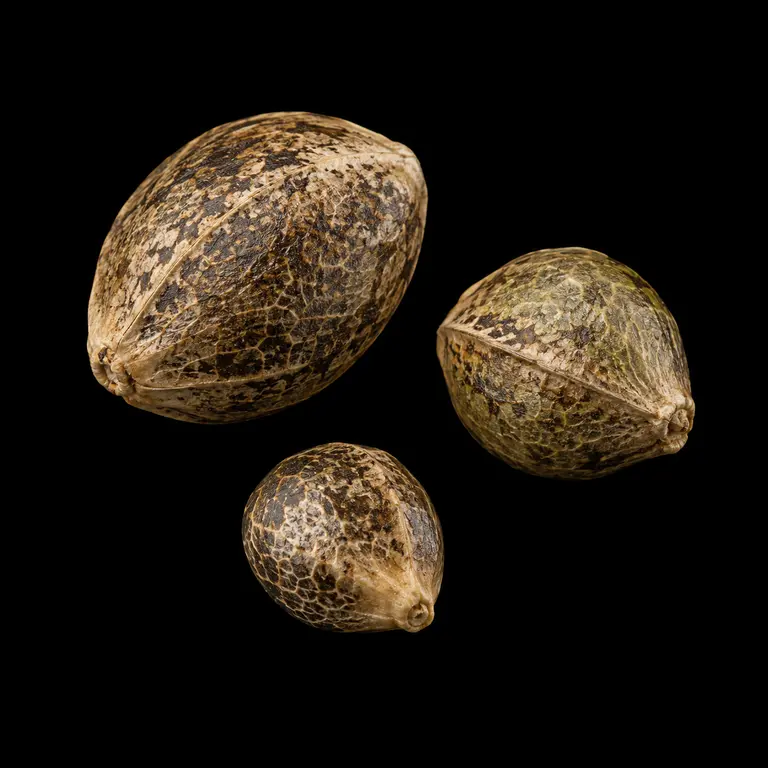
The abbreviation names a compound. It does not, on its own, give a concentration, ratio or laboratory finding.
CBD-rich, CBD-dominant and low THC emphasize different information. Read the definition and the sample behind the wording.
A cannabinoid-related label can appear alongside feminized, regular or autoflower. Those terms describe other aspects.
A seed description often uses the name of a characteristic associated with the plant material it represents. That shorthand can be convenient, but it creates ambiguity when the same words are read as an ingredient statement. CBD seeds and a food ingredient containing CBD are not equivalent descriptions.
The FDA’s explanation of hemp seed-derived ingredients states that seeds do not naturally contain THC or CBD. Trace contact with other plant parts is a separate issue. The practical reading distinction is simple: do not turn a cannabinoid-related seed label into a measured claim about the seed itself.
The dedicated article do hemp seeds contain CBD? explores the ingredient vocabulary. It separates whole seeds, hemp seed oil and products that explicitly list cannabidiol.
CBD-rich emphasizes CBD content, but the comparison behind rich needs to be stated. CBD-dominant commonly expresses that CBD predominates relative to THC in the reported profile. Low THC emphasizes the THC side. A useful account should explain which of these meanings it uses rather than treating the phrases as synonyms.
A ratio also leaves an important question unanswered: the absolute amounts. The same proportion can describe different quantities. Two fictional records could share a CBD:THC ratio while reporting different concentrations of both compounds. A ratio is therefore one part of a profile, not a complete substitute for its measurements.
For worked examples with clearly labelled fictional values, read high CBD versus low THC. That comparison keeps amount, proportion and legal classification separate, so a short phrase does not carry more meaning than its evidence supports.
| Term | Main subject |
|---|---|
| CBD-related label | A cannabinoid characteristic or profile |
| Feminized or regular | A sex-related seed category |
| Autoflower | A flowering-response characteristic |
| Strain name | The named identity or attributed source |
A description such as “feminized CBD autoflower” combines three subjects. Its length does not make it three competing products. Each word contributes a separate part of the account, and none should be used to infer an unstated result in another field.
For example, autoflower does not supply a CBD concentration. Feminized does not establish a particular THC measurement. A familiar strain name does not replace either missing figure. Keeping the fields separate is especially helpful when comparing short descriptions written by different sources.
The regular seed guide, feminized guide and autoflower guide each explain their own part of this vocabulary.
Research by Smith and colleagues in 2022 examined the phytochemical diversity of commercial cannabis and found that commonly used commercial labels did not consistently reflect that chemical diversity. Its findings give a reason to keep an actual chemical profile visible rather than replacing it with a familiar name.
A profile belongs to particular material. A record is clearer when it identifies whether the claim concerns a general source description, a named variety, a lot or a tested sample. These levels can inform one another, but they should not disappear into a single unsupported percentage.
An ordinary library description might say, “The source describes this material as CBD-dominant.” A laboratory result would make a different statement about assessed material. Both can be useful; their value depends on preserving which kind of information the reader is seeing.
A chemical description tells you something about composition. It does not, by itself, establish that a product treats a condition or is suitable for a particular person. The FDA distinguishes approved medicines from other cannabis-related products and warns against unsupported therapeutic claims. This guide explains terminology and does not recommend treatment or dosing.
Legal status is another separate question. A CBD label alone does not identify the jurisdiction, material or regulated activity. A rule concerning one kind of product should not be silently transferred to seeds, plants or a different finished product. See the European legal overview for that framework.
Taken together, the distinctions make a profile easier to read: identify the compound, understand the descriptive label, keep the measurement with its sample and follow the separate guide for sex, flowering or legal vocabulary. The genetics and strains hub connects these records to named identities.
Questions, untangled
No. In this context the phrase concerns associated plant characteristics, not a measurement of cannabinoid content inside the seed.
No. A comparative description does not establish complete absence. A ratio and an absolute amount also answer different questions.
Yes. The cannabinoid description and the sex category concern different aspects of the material.
No. CBD is a cannabinoid name; autoflower concerns flowering response. One term cannot supply the other’s meaning.
Read do hemp seeds contain CBD? for the difference between a seed ingredient, seed oil and a CBD-labelled product.