Which event starts the interval?
A duration is measured from a named starting point. A date on a label and a biological event are not interchangeable unless the description explicitly connects them.
Field notes / 11 · The knowledge library
How Long Does an Autoflower Take? Understanding Timing Claims
There is no single duration established by the word autoflower. Before interpreting a time claim, identify the starting event, the endpoint and the material being described. This article explains those distinctions rather than supplying a cultivation calendar.
Explore the distinction ↘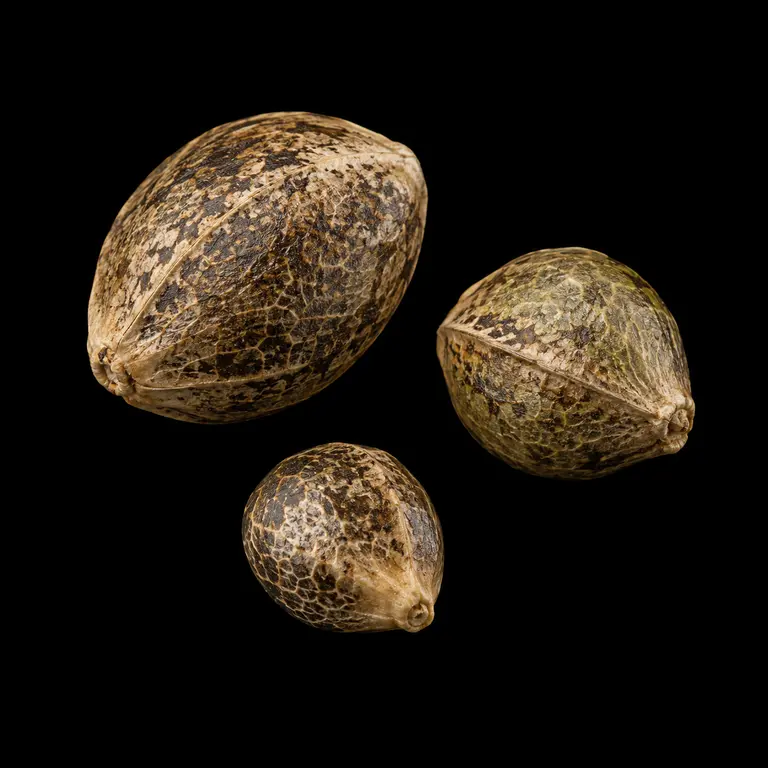
A duration is measured from a named starting point. A date on a label and a biological event are not interchangeable unless the description explicitly connects them.
The first observation of flowering, a later developmental stage and the completion of a study are different endpoints. A number needs its endpoint beside it.
A result can concern an individual, a sample or a summary of a population. Its meaning changes if it is extended to material that was not part of the original account.
A phrase such as flowering time may describe the time until flowering begins, or a duration associated with a later flowering phase. Those are not automatically the same measurement. Read the source definition rather than assuming that every page starts and stops its clock at the same events.
| Part of the claim | What needs to be clear |
|---|---|
| Starting point | The event from which elapsed time is counted |
| Endpoint | The observation that defines completion |
| Subject | The material or group covered |
| Summary | Whether the number is a first observation, average or range |
| Context | Where the statement comes from and what it actually measured |
This is a general principle of measurement. A train journey timed from departure is different from a journey timed from leaving home. Both durations may be correctly reported, yet comparing their numbers without their definitions would answer the wrong question.
The same care is needed when a short description omits its endpoints. Missing information is not an invitation to fill the gap with whichever definition is most familiar.
In the research context used here, autoflowering refers to flowering that is not dependent on a change in photoperiod. That definition concerns the relationship between flowering and the daily light–dark cycle. It does not contain a fixed numerical duration.
Studies of flowering genetics distinguish traits and investigate variation among material. The study identifying Autoflower1 and Early1 treated photoperiod-insensitive and early flowering as research subjects with genetic context. A single category word should not compress all of that variation into an identical schedule.
Our conclusion is therefore about what the label supports: autoflower alone is insufficient evidence for an exact duration. A source-specific time statement would need its own definition and supporting record, even if the category itself is accurately described.
This also explains why early and autoflower are not interchangeable words. Early is comparative: earlier than what, for which event? Autoflower names a response category. A comparative timing adjective and a response description answer different questions.
A range describes an interval between values. An average summarises observations. A first recorded event identifies one point in a sequence. None of these is a substitute for the others, and none automatically predicts an individual outcome.
Imagine a fictional archive where objects arrive on different dates. The first arrival date, the average arrival date and the span from first to last can all be calculated from the same records. They are different summaries of one set of events, not competing answers to an identical question.
A study can also end before every event of interest has been observed. The end of observation is then a feature of the record, not necessarily the biological endpoint for every subject. A report should make clear what happened and what was simply no longer observed.
| Term | Meaning to preserve |
|---|---|
| First observed | The earliest recorded event in the stated group |
| Average | A summary of a specified set of observations |
| Range | The stated interval of values, with its scope |
| Prediction | An estimate about an outcome beyond the recorded observations |
These examples explain statistical language. They do not provide cannabis timing data. Their purpose is to prevent a group-level statement from becoming an unsupported personal deadline.
The 2021 study of hemp flowering response reported that material sharing a cultivar name but obtained from different sources could differ in its response. The finding is a reason to preserve source identity when discussing a study, rather than treating the name as a complete specification.
That does not mean every repeated name is unreliable. It means the scientific record concerns identified material in a particular context. A short commercial description and an experimental result may use the same name without establishing that they refer to the same subject.
A useful account therefore says whether a time is a measured result, a reported estimate or a general description. It keeps the origin of the statement visible. Copying a number onto another page should not erase its original endpoints or scope.
Two apparently conflicting durations may turn out to describe different events. If their definitions genuinely match, the remaining difference needs explanation from the sources. It should not be resolved by simply choosing the shorter figure or averaging unrelated claims.
If your question is what autoflower means, begin with autoflower and photoperiod terminology. If it is whether autoflower and feminized can overlap, use the comparison of those labels. Neither category article assigns a universal duration.
The germination knowledge guide explains a different developmental process and its terminology. Germination and later flowering are distinct milestones, so their time descriptions should not be silently merged.
Keeping the milestone visible is the central reading habit. A useful duration is not just a number that sounds plausible. It is a number attached to defined events, identified material and a source that explains what was measured.
Questions, untangled
The label does not establish a universal duration. A particular time claim needs its own endpoints and supporting context.
No. The phrase can be used for different intervals. The source should define where its measurement begins and ends.
Not necessarily. Early is a comparative timing description; autoflowering describes flowering response. The words should not be treated as synonyms.
You cannot establish that they measure the same interval. Clarify the definitions before interpreting the difference.
No. It explains biological terminology and the interpretation of time claims. It does not provide a growing schedule or a prediction for an individual plant.
The wider context
Explore the central cannabis seed knowledge guide for an overview of biology, labels and related reading.