What regular describes
Regular is used for a seed category that can include male and female offspring. It is not a description of a seed’s visible pattern.
Field notes / H06 · The knowledge library
What Are Regular Cannabis Seeds? Sex, Flowering and Genetics Explained
Regular cannabis seeds are a seed category from which both male and female plants may occur. The word distinguishes the category from feminized seeds; it does not specify a strain, a flowering schedule or a chemical profile. This guide connects those separate ideas and points to the detailed comparisons.
Explore the distinction ↘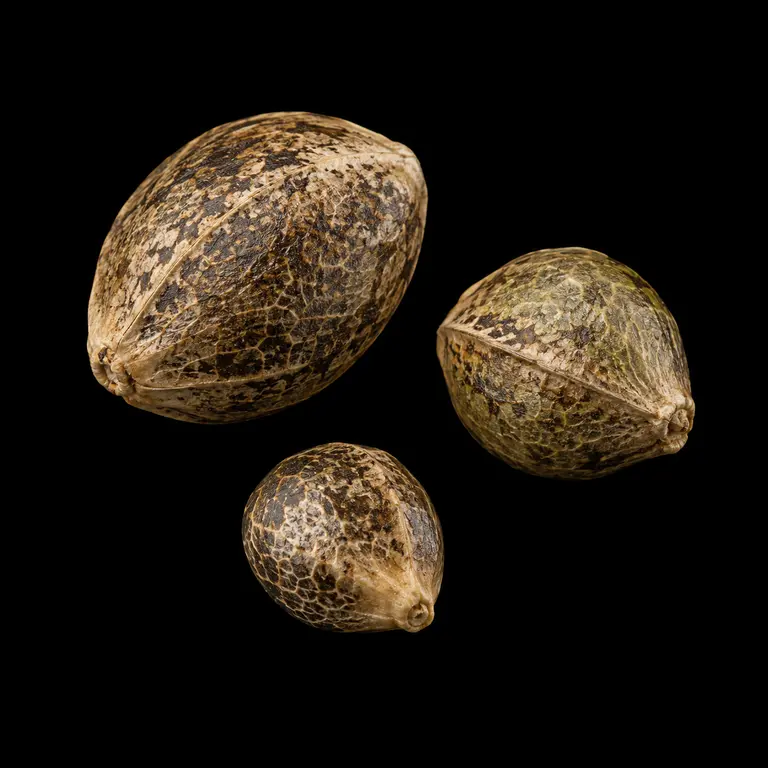
Regular is used for a seed category that can include male and female offspring. It is not a description of a seed’s visible pattern.
Autoflower and photoperiod concern flowering response. They answer a different question from the regular-versus-feminized distinction.
A strain name or source record identifies the material being described. Regular alone does not provide that identity.
The everyday meaning of regular can suggest ordinary, standard or unmodified. In seed terminology, those associations are not the definition. Regular primarily distinguishes a sex-related seed category from feminized. It should not be expanded into a promise about purity, authenticity or superior quality.
Cannabis is commonly described as dioecious, meaning male and female reproductive structures occur on separate plants, although other sex-expression patterns exist. The Canadian Food Inspection Agency’s biological overview explains this broader botanical context. A short category label is useful, but it is not a complete account of every form of sex expression in the species.
A reader can therefore use regular to understand the kind of category being discussed while leaving other questions open. What named material is it? What source describes it? Does the account also specify flowering response? These are additional pieces of the description, rather than alternative meanings of the word.
A simplified account of cannabis sex inheritance often discusses male and female offspring as two possibilities. That model must not be mistaken for a guarantee that every small group contains exactly equal numbers. A category-level expectation and a count observed in a particular sample are different things.
The same statistical distinction appears in a coin analogy: an equal-probability model does not require every short sequence to contain equal counts. The analogy illustrates the difference between probability and an observed sample; it does not claim that every cannabis lot follows a perfectly balanced model.
If an account reports a sex ratio, the useful details include the population assessed and whether the number is an observation or an expectation. Keeping those details visible gives the figure a subject. Removing them can turn a limited report into an unsupported universal claim.
For the separate question of what can be inferred from the seed’s appearance, read male or female cannabis seeds. A photograph and a documented sex-category description are different sources of information.
| Field | Example of the question |
|---|---|
| Sex category | Regular or feminized? |
| Flowering response | Autoflower or photoperiod-related description? |
| Named identity | Which strain or source is described? |
| Chemical description | What cannabinoid information is reported? |
A phrase can fill more than one of these fields. “Regular autoflower” combines a sex-category description with a flowering-response description. “Regular CBD” combines a sex-category description with a cannabinoid-related description. The combinations are not contradictory simply because they contain more than one category word.
Conversely, a missing field should remain missing information. A name followed only by regular does not automatically specify its flowering response or establish a laboratory result. A clear profile keeps those fields separate so readers do not have to guess which meaning is intended.
Our autoflower versus regular/photoperiod article explains why that common comparison can be confusing. The feminized versus regular comparison addresses the sex-category distinction directly.
Sex category and genetic identity operate at different levels. Describing a group as regular does not identify every inherited characteristic of its members. It also does not establish that material from different sources is interchangeable merely because both descriptions use the same category.
Sawler and colleagues’ research on cannabis genetic structure found that names and reported ancestry did not reliably specify identity across their sampled material. This supports a narrower reading of familiar names: they can connect a description to a source or history without replacing an assessment of the material.
The label regular likewise cannot establish an uninterrupted historical lineage. Claims such as heirloom, landrace or preserved original material require their own context. They concern history and provenance, while regular concerns a different part of the description. Read old-school cannabis terminology for those historical distinctions.
Consider a fictional library record: “Example R; described by its source as regular; flowering category not stated.” It is brief, but each piece of information has a clear role. Rewriting it as “original photoperiod genetics” would add claims the record did not supply.
This guide is the starting point for regular-seed vocabulary. Continue to the feminized guide for the contrasting category, the autoflower guide for flowering response, or CBD seeds explainedCannabis seeds versus hemp seedsCBD autoflower versus other CBD seedsCBD seeds without THC?Are feminized seeds always female?Can feminized plants produce seeds?How the feminized seed category arisesRegular CBD versus feminized CBDEarly female floral featuresPollen sacs and floral anatomyWhy female cannabis plants can contain seeds for cannabinoid-related descriptions.
Questions, untangled
No. Regular is used for a category in which both male and female plants may occur. It is not a male-only designation.
No. An expectation about a population is different from the observed count in a particular small group. A reported ratio needs its sample and context.
No. Regular and feminized concern one distinction; autoflower concerns flowering response. They belong to different fields in a description.
No. Historical origin and continuity are separate claims. The word regular does not establish either of them.
The feminized versus regular guide focuses on that comparison. This page connects it to the broader terminology.