The broader plant context
The botanical relationship is different from the way everyday language separates hemp foods and other cannabis material.
Field notes / A05 · The knowledge library
Cannabis Seeds vs Hemp Seeds: Plant Names, Food and Category Labels
Hemp seeds and cannabis seeds are not best understood as seeds from two completely unrelated plants. Cannabis is the broader botanical name, while hemp is used in agricultural, food and legal contexts. The meaningful distinction depends on whether the subject is a food ingredient, a seed category or a legal definition.
Explore the distinction ↘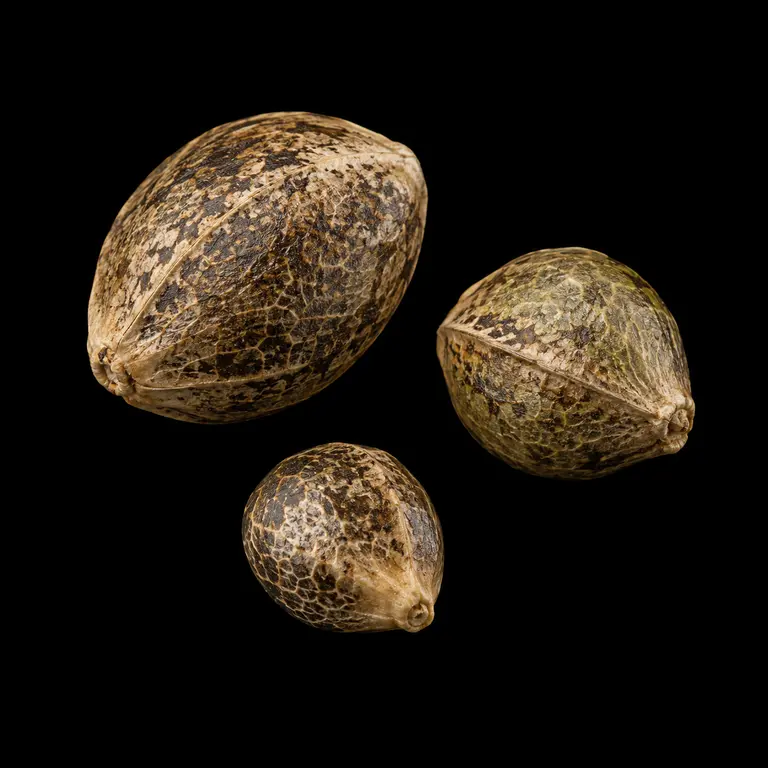
The botanical relationship is different from the way everyday language separates hemp foods and other cannabis material.
A hulled seed food, an oil and a named seed category are different subjects, even when they share a plant name.
A legal definition belongs to a jurisdiction and activity. An informal name cannot replace those details.
The Canadian Food Inspection Agency’s biological account discusses hemp and marijuana within Cannabis sativa and notes the long-running debate over cannabis taxonomy. The everyday contrast between the words is therefore not a reliable guide to two wholly separate botanical species.
Common names serve purposes other than formal classification. A grocery label may emphasize the food ingredient; an agricultural description may emphasize a crop use; a botanical text may discuss relationships across the species. The language changes because the question changes.
For example, asking whether hemp belongs to cannabis is a classification question. Asking what is in a packet of hulled hemp seeds is an ingredient question. The first answer gives context for the second, but it does not replace the ingredient description. Keeping both questions visible resolves much of the apparent contradiction.
The European Commission describes hemp seeds as a food and feed resource, including the use of de-hulled seeds for human food. Its overview identifies nutritional components such as protein and oils. Those are food characteristics, rather than a claim that a seed ingredient is a cannabinoid product.
Whole seed, hulled seed and hemp seed oil also describe different forms. A discussion that switches among them without saying so changes its subject. A food ingredient name should be preserved in full, especially when comparing a label with an explanation online.
The FDA’s review of hemp seed-derived food ingredients distinguishes those ingredients from products containing added CBD or THC. Its conclusions about specific seed-derived ingredients do not automatically apply to every product with hemp in its name.
Read do hemp seeds contain CBD? for the separate question of seed composition, trace contact and the difference between seed oil and a CBD-labelled product.
| Wording | Main subject |
|---|---|
| Hulled hemp seed | A food ingredient and its form |
| Hemp seed oil | An oil identified by its seed source |
| Feminized or regular | A sex-related seed category |
| Autoflower | A flowering-response description |
| CBD-related seed label | An associated cannabinoid-profile description |
These are not five interchangeable types on a single scale. A food form and a sex category do not classify the same characteristic. The table makes that distinction visible without implying that an informal name establishes every property of a particular item.
An article comparing hemp seeds with cannabis seeds should therefore state which usage it means. If it compares a food ingredient with a named seed category, it is comparing descriptions with different purposes. It should not present the wording alone as an analysis of the contents or a test of identity.
The cannabis seed guide provides the broader category map. For one specific description, the CBD seed guide explains why a cannabinoid-related name is not a measured statement about CBD inside a seed.
Hemp also appears in regulatory language. The European Commission’s agricultural overview describes requirements associated with particular hemp material and uses. That context matters: a term appearing in an agricultural rule cannot be treated as a universal permission covering every cannabis-related activity.
A short statement such as “hemp is legal” omits the jurisdiction, the material and the activity. The omitted details may be the very details needed to interpret the statement. This is a problem with the scope of the sentence, even before anyone considers an individual case.
The European legal overview explains those distinctions. This comparison focuses on terminology and does not decide the legal status of a particular seed, food or transaction.
Consider three fictional library entries: “hulled hemp seed ingredient,” “Example C, described as feminized,” and “oil blend containing hemp seed oil.” The first identifies an ingredient form. The second records a seed-category description. The third names one component of a blend.
Retaining the full ingredient or category name keeps each claim attached to its subject. A shortened plant name alone does not identify an ingredient form or a measured composition.
Questions, untangled
No. Their everyday use does not establish that botanical distinction. Formal classification and common names serve different purposes.
Not in every context. An agricultural, botanical or food description may use the term differently. Read the complete description.
No. The seed-oil name identifies an ingredient source. A CBD-labelled product needs its own ingredient and composition description.
A food ingredient name does not supply that separate seed-category information. Do not infer one classification from the other.
The cannabis seed knowledge guide connects the main labels, while the linked ingredient article explains hemp seed foods and oil.