Why seed formation is possible
Female reproductive structures have a role in seed formation. A female description is not a statement of sterility.
Field notes / A37 · The knowledge library
Why Can a Female Cannabis Plant Contain Seeds? Biology and Evidence
Female describes a sex-related aspect of the plant; it does not mean unable to form seeds. Seeds in female cannabis material are therefore not a contradiction. Explaining the general biology is different from determining the precise reproductive history of a particular sample.
Explore the key terms ↘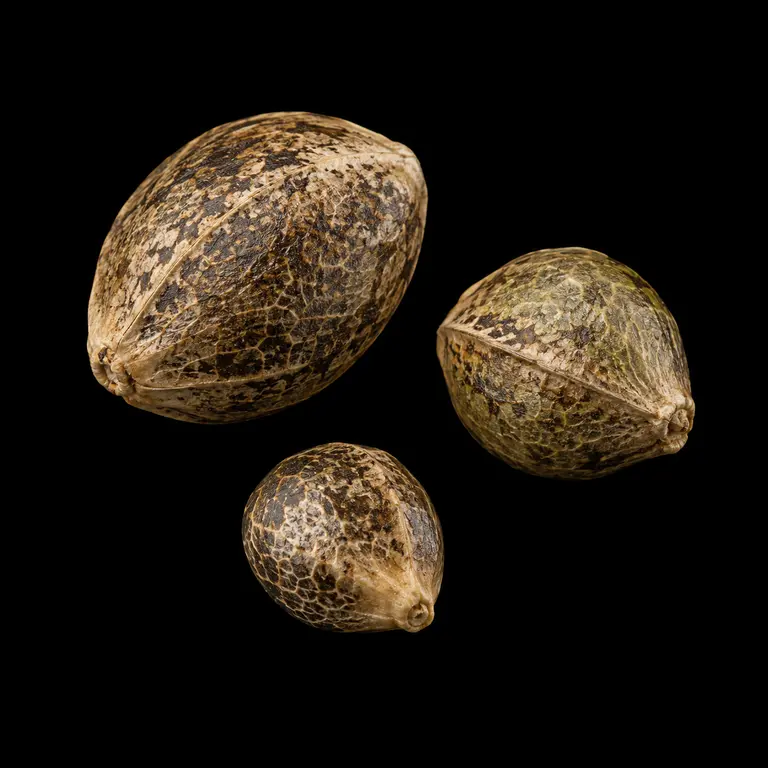
Female reproductive structures have a role in seed formation. A female description is not a statement of sterility.
A record of seeds concerns particular material. Keep that observation attached to its subject.
The presence of seeds does not identify every source or event involved in their formation.
This identifies a sex-related description. It does not state that no seed can ever be present.
This describes an absence of seeds in the material discussed. It is not automatically proof of reproductive inability.
The distinction resolves the basic confusion behind the question. One word concerns sex, and the other concerns an outcome. Making them synonyms creates a contradiction that is not present in the biological description.
The same applies to feminized. A plant originating from a feminized seed category is not thereby described as sterile. The feminized seed-formation article explains that category-specific question.
In the general reproductive account, pollination and fertilization are related but distinct. Ordinary seed development follows fertilization of an ovule. The terms describe a biological sequence, rather than three alternative names for a seed already visible in a sample.
Research on cannabis floral morphology and seed formation gives context for this process. It also shows why floral expression should be described precisely rather than compressed into a single assumption about the entire reproductive history.
A general biological sequence does not identify what happened in a particular sample. That question requires records tied to the material being described.
A discovery account can establish that seeds were reported in particular material. That information does not, by itself, identify the pollen source, establish the complete ancestry or show the circumstances of every reproductive event.
Consider a fictional record: “Seeds were observed in flower labelled Example F.” The sentence reports a finding and an accompanying name. Rewriting it to specify an undocumented parent or cause would add information that the observation did not supply.
An account can be useful without making that leap. It can preserve the observation, state the source attribution and distinguish any later assessment from the original discovery. The bagseed article explains the informal discovery term in that context.
General biology explains what kinds of events can occur. A case-specific explanation identifies what evidence connects those events to the material being discussed. Confusing possibility with proof is a common way for a short account to become more certain than its record allows.
For example, knowledge that a type of floral expression exists does not establish that it occurred in an unexamined specimen. A source needs observations or other relevant records before presenting that explanation as the demonstrated history of the sample.
The same principle applies to photographs. An image may show a seed or a floral detail, but it is not automatically a record of an earlier event. A caption should say what the image actually documents and keep a proposed history separate.
“Can a female plant form seeds?” asks about capacity. “Were seeds present in this material?” asks about an observation. “Why did this particular event occur?” asks for an explanation tied to a case. Those questions require different levels of information.
This article connects them without claiming to diagnose an individual plant. For general seeds-in-flower vocabulary, read seeds in cannabis flowers. For anatomical names, use female floral features and pollen-related structures.
The broader genetics and strains guide explains why a name and a reproductive history are also different records. A clear description preserves both the biological answer and the limits of the individual evidence.
Questions, untangled
No. Female does not mean sterile or necessarily seedless.
No. The seed-category description does not establish reproductive inability.
No. The observation alone does not identify the complete reproductive history.
No. A case-specific conclusion requires evidence tied to that material.
The bagseed guide separates the discovery context from ancestry and identity claims.