The intended female outcome
Feminized is a category description associated with the material’s breeding background. It names a particular intention rather than every characteristic of the offspring.
Field notes / H04 · The knowledge library
What Are Feminized Cannabis Seeds? Meaning and Biology Explained
Feminized cannabis seeds are seed material described as intended to produce female plants. The term concerns the sex-related outcome of a seed line. It does not, by itself, identify flowering response, a particular strain, a chemical profile or the condition of an individual seed.
Explore the distinction ↘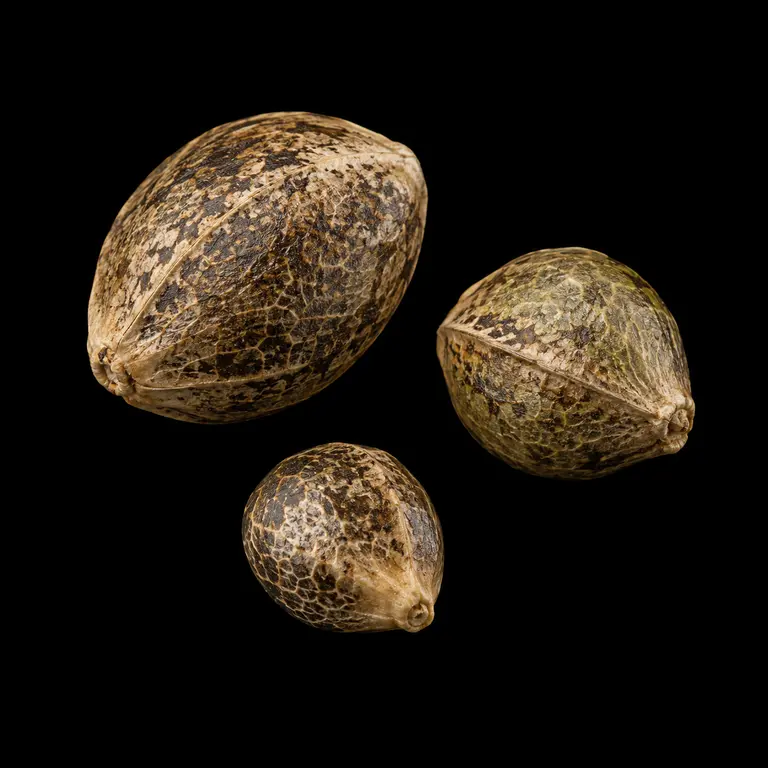
Feminized is a category description associated with the material’s breeding background. It names a particular intention rather than every characteristic of the offspring.
Genetic information and the reproductive traits expressed by a plant are related but distinct subjects. Keeping the two clear makes the terminology easier to read.
The category word alone does not establish an individual result, an exact percentage or the accuracy of every other statement attached to the material.
The word feminized is commonly attached to seeds, yet its meaning concerns a sex-related outcome in the resulting plants. It is not a term for a particular surface pattern or the shape of the dry seed. A printed label and an exterior observation have different roles.
That distinction resolves a common misunderstanding. A photograph can illustrate seeds described as feminized without showing a visible feature that proves the category. The classification comes from the material’s documented background, not a pattern inferred from the illustration.
| Subject | Relationship to feminized |
|---|---|
| Sex-related category | The primary meaning |
| Shell appearance | Not a defining visual pattern |
| Flowering response | A separate trait description |
| Cultivar identity | A separate name and source question |
| Quality assessment | A separate claim with its own evidence |
For the visual misconception in detail, read can seed appearance reveal male or female identity? The definition here gives the broader category context.
Dioecious cannabis is described in research using a sex-chromosome system in which females are generally XX and males generally XY. A chromosome description concerns genetic information. Floral anatomy describes the reproductive characteristics that are expressed.
Researchers also study variation in sex expression. A paper discussing such variation is not necessarily contradicting an introductory genetic model; it may be examining a different layer of the biology.
The 2021 study of feminized cannabis seed cited below examined sex expression and progeny in specified material. It supplies research context for the term. It does not independently verify the classification of every product that carries the label.
Understanding the difference between a general model and a particular record prevents overstatement. A category can have a coherent meaning while a specific claim about a packet still requires evidence.
Feminized and regular are commonly compared as sex-related seed categories. Autoflower and photoperiod-sensitive concern flowering response. Comparing one word from each dimension without explaining the distinction can make compatible labels sound like opposites.
A description can therefore say feminized autoflower or feminized photoperiod-sensitive. Each supplies the sex-related category plus a flowering description. Neither phrase provides a complete account of every biological characteristic.
| Phrase | Information supplied |
|---|---|
| Feminized | The sex-related category |
| Feminized autoflower | Sex-related category and flowering response |
| Feminized photoperiod-sensitive | Sex-related category and a different flowering response |
| Feminized plus a cultivar name | Category and identity as presented by the source |
The dedicated feminized versus regular article addresses the direct category comparison. The autoflower comparison explains the overlap. This guide defines the term rather than repeating every pairwise comparison.
Several statements can appear beside one another without meaning the same thing: a category label, an observed group result and a prediction about an individual. A precise description identifies which kind of statement it is making.
The phrase intended female outcome describes the category. A statement that a specified sample had an observed result refers to that sample. An absolute promise about every item is a broader claim and needs its own basis.
Imagine a fictional collection described by a group-level characteristic. The description can be useful without documenting every member individually. The category and the individual record are separate levels of information, so one should not be silently substituted for the other.
The same principle applies to percentages. A number without its subject, date and definition leaves the reader guessing what was measured. A large percentage is not a substitute for the missing context.
Our guide to quality claims and evidence develops this distinction through examples of reports, labels and photographs.
A familiar strain name may occur in several descriptions. The feminized label does not establish that all those descriptions concern the same lot, source or version of the material. The identity record still matters.
A useful account keeps the source of its claims visible. A page quoting a breeder, a botanical study and a specimen caption is drawing on different kinds of information. It should not blend them into the impression that one source verified every statement.
This matters especially when a general illustration appears beside a named variety. The picture may make the article inviting, but it does not document a specific genetic identity unless its provenance supports that role.
The feminized category page places the term in the site’s catalogue context. Individual strain profiles add their own source information. Neither should imply that a generic illustration is a verified product photograph.
Female, feminized, pistillate and dioecious are related words, but they are not synonyms. Female concerns a reproductive description; feminized concerns the seed category; pistillate describes female floral structures; dioecious describes male and female flowers occurring on separate individuals.
Keeping those terms separate avoids statements such as a feminized leaf or a dioecious seed pattern, which confuse different levels of description. A leaf outline is an appearance feature, while a reproductive category concerns another question.
For the anatomical vocabulary, see male and female plant biology. For the wider map of seed categories and records, return to the general cannabis seed guide.
The useful definition remains specific: feminized describes seed material associated with an intended female outcome. Other properties belong beside that definition as separate statements, each with an appropriate source.
Questions, untangled
It describes seed material intended to produce female plants. Its primary subject is the sex-related category.
Yes. The two terms concern different traits and can be combined.
No. The category should not be inferred from exterior markings alone.
No. A chemical-profile statement is separate and requires its own evidence about the material.
No. It explains the category, biological terminology and interpretation of claims, without a breeding or cultivation protocol.
High CBD versus low THCRegular seeds explainedCBD seeds explainedCannabis seeds versus hemp seedsCBD autoflower versus other CBD seedsCBD seeds without THC?Are feminized seeds always female?Can feminized plants produce seeds?How the feminized seed category arisesRegular CBD versus feminized CBDEarly female floral featuresPollen sacs and floral anatomyWhy female cannabis plants can contain seedsDo hemp seeds contain CBD? — High CBD and low THC answer different questions. Learn the difference between concentration, cannabinoid ratio, seed labels and a measured chemical profile.
Are feminized seeds always female? · Can feminized plants produce seeds? · How the feminized seed category arisesRegular CBD versus feminized CBDEarly female floral featuresPollen sacs and floral anatomyWhy female cannabis plants can contain seeds
Regular CBD versus feminized CBDEarly female floral featuresPollen sacs and floral anatomyWhy female cannabis plants can contain seeds — the sex-category difference, explained alongside the shared cannabinoid wording.