Compound
CBD is cannabidiol
Field notes / T01 · Knowledge library
High CBD is a description of composition that needs a reference point. It is not the name of a single botanical variety. This guide explains the subject of the label, the difference between amount and ratio, and the evidence needed to interpret the wording.
Explore the concepts ↘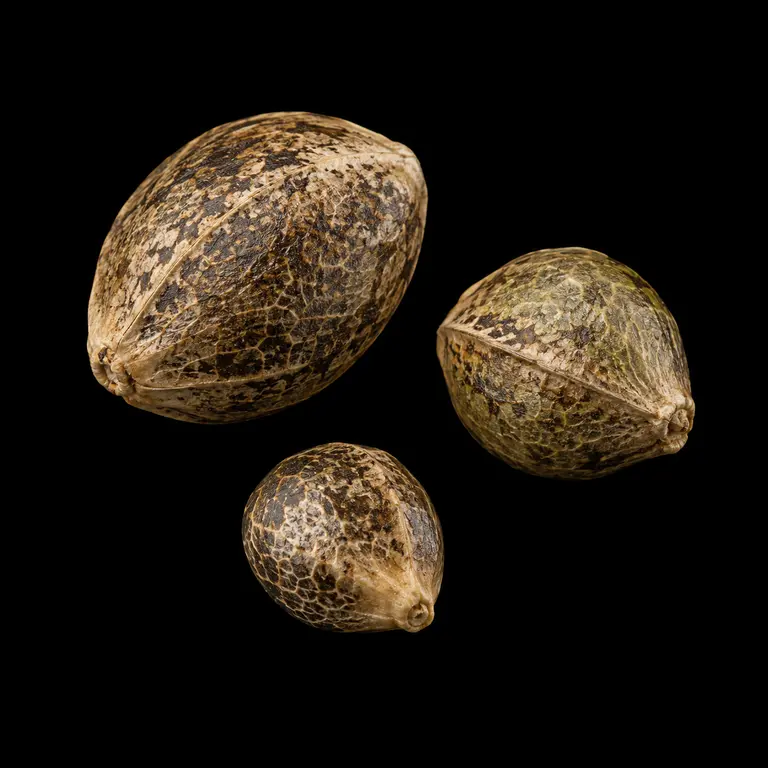
CBD is cannabidiol
A concentration needs a basis
A proportion needs both terms
On a seed-category page, a cannabinoid descriptor generally concerns the associated plant profile. It should not be read as a measurement of the seed itself. The FDA explains that cannabis seeds do not naturally contain CBD or THC.
A clear description identifies its subject before discussing its composition: a named variety, a description supplied by a source or an analysed sample. These are distinct levels of information. Keeping the subject visible prevents a broad category heading from appearing to be a laboratory result.
An adjective can be meaningful within a defined comparison, yet vague when removed from it. A fictional catalogue might call one profile high relative to its own examples; a research paper might define a group according to stated analytical criteria. The same adjective does not ensure the same definition.
The reader therefore needs the surrounding explanation. Repeating high in a title, a badge and a caption does not add evidence. A single clearly attributed definition is more informative than several repetitions of an undefined superlative.
Imagine two fictional measurements expressed on the same arbitrary basis: 6 units of one compound to 3 of another, and 12 to 6. Both ratios are 2:1, although their absolute amounts differ. The mathematics shows why proportion cannot replace concentration.
The order of the terms matters as well. A ratio labelled CBD:THC should retain those labels when quoted. This example illustrates the structure of a claim; the invented numbers are not product specifications, thresholds or recommendations.
Smith and colleagues compared commercial labels with measured chemical diversity and found that the labels did not consistently align with that diversity. The study supports reading a chemical result as a result about the analysed material, rather than as a property proven by a familiar name.
A profile label alone does not establish a medical effect or a complete safety assessment. This library uses it as a subject for explanation. Readers looking for the distinction between two descriptors can continue to the high-CBD versus low-THC comparison in the main knowledge library.
Questions, untangled
No. It is a compositional description that can be applied in different source contexts.
No. It should not be interpreted as a cannabinoid assay of the seed.
No. Different amounts can share the same proportion.
No. The descriptions concern different compounds.
No. It is an educational explanation of the label.