The daily light–dark cycle
Photoperiod concerns the duration of light and darkness in a daily cycle. In flowering research it names the environmental pattern whose relationship with a response is being studied.
Field notes / H05 · The knowledge library
What Are Autoflower Cannabis Seeds? Flowering Response Explained
Autoflower cannabis seeds are described as producing plants whose flowering initiation does not depend on a change in photoperiod. The word identifies a flowering-response category. It does not, by itself, state a fixed duration or every other characteristic of the seed line.
Explore the distinction ↘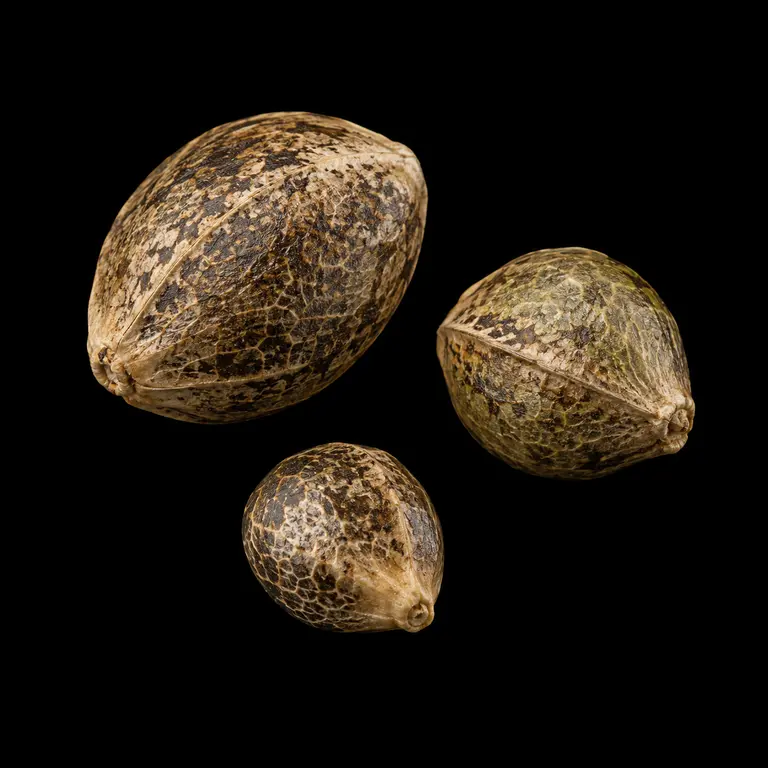
Photoperiod concerns the duration of light and darkness in a daily cycle. In flowering research it names the environmental pattern whose relationship with a response is being studied.
Autoflowering is discussed as photoperiod-insensitive flowering. The statement concerns flowering response rather than the absence of every biological relationship with light.
A category can include different genetic backgrounds and other traits. Sharing the autoflower label does not establish that two lines are otherwise identical.
In this context, flowering initiation is the developmental transition being discussed. Photoperiod is the daily light–dark pattern. Autoflowering names a response category in relation to that pattern, rather than a number on a calendar.
The word auto is sometimes read too broadly. It does not mean independent of all environmental factors or identical in every circumstance. Expanding a specific response term into a claim about the entire plant changes its meaning.
| Phrase | What it concerns |
|---|---|
| Photoperiod | The daily light–dark pattern |
| Photoperiod sensitivity | The relationship between that pattern and the response |
| Autoflowering | A flowering-response category |
| Duration | A separate interval with a defined beginning and end |
The distinction is useful even without discussing any cultivation practice. It allows a reader to understand a botanical description without supplying assumptions that the source has not stated.
Research has identified multiple genetic regions associated with photoperiod-insensitive flowering in cannabis. A 2024 study reported Autoflower2 alongside the previously studied Autoflower1 context. This supports a view of the category as involving genetic variation, rather than one universal description of every line.
The 2022 study of Autoflower1 and Early1 distinguished photoperiod-insensitive and early-flowering traits. Those are related subjects, but they should not be collapsed into a single meaning of fast.
These findings are research context, not a genetic certificate for any named product. A product claim about a particular variant would need evidence connecting that material to the finding, rather than merely repeating the word autoflower.
A label can be meaningful without revealing the full mechanism behind a trait. Readers do not need a complete genetic account to understand the category, but they should not mistake the category for that complete account.
Feminized describes an intended female outcome; regular is a sex-related seed category. Autoflower describes flowering response. These words operate on different dimensions, so one does not automatically supply or exclude the other.
A description can identify material as feminized autoflower. That combination names two traits. If it only says autoflower, the feminized or regular designation should not be assumed from familiarity with other descriptions.
| Dimension | Question | Examples |
|---|---|---|
| Flowering response | What response is described? | Autoflower, photoperiod-sensitive |
| Sex-related category | How is the seed material presented? | Feminized, regular |
| Identity | Which material is named? | Cultivar name and source reference |
The autoflower versus feminized comparison explains how the first two dimensions overlap. The regular and photoperiod article resolves another common shorthand.
This guide provides the definition that those comparisons build on. The presence of several menu categories does not make their biological meanings mutually exclusive.
A timing claim needs a starting point and an endpoint. Beginning flowering earlier is not the same measurement as having a shorter later phase. Neither is automatically a complete account of the life cycle.
A phrase such as fast flowering is comparative. It needs a reference: faster than what, for which interval, in which material? Autoflower has a different role: it names a response category rather than the size of an interval.
A source may correctly use both ideas in one account. The important point is to preserve their definitions. A shared keyword should not turn two different measurements into an apparent agreement or contradiction.
The autoflower timing guide explores starting events, endpoints, averages and ranges. The fast flowering comparison distinguishes timing adjectives from flowering response.
This definition guide therefore does not assign a universal number of days. Such a number would require its own material-specific context and could not be derived from the category word alone.
A study of hemp flowering response reported that material with the same cultivar name but obtained from different sources could differ in its response. The finding shows why source identity belongs with a research result.
It does not mean every shared name is unreliable. It means a name alone may not identify every detail of the material. A careful summary retains the study’s subject instead of extending its findings to all similarly named descriptions.
The same distinction applies within a catalogue. A strain profile, a seed category and a reported assessment each concern a different level of information. Their links can help readers move between those levels without pretending they are interchangeable.
Our autoflower category page provides catalogue context. Strain profiles provide their own source notes. The quality-evidence article explains how to read additional claims without treating a familiar label as proof of every property.
Germination and seedling development are earlier biological subjects with their own terminology. An autoflower label should not be used as a substitute for definitions of embryo, radicle, cotyledon or emergence.
For those concepts, use the germination knowledge guide and the seedling appearance reference. Those articles explain the stage being described instead of attaching every question to a flowering category.
Similarly, a photograph of a dry seed cannot establish flowering response on its own. It may illustrate the topic, while a documented description provides the classification. The image and the label have different evidentiary roles.
The general cannabis seed guide places these ideas within the whole library. The central definition here remains narrow and useful: autoflower names a flowering response, while duration, identity and other characteristics require separate descriptions.
Questions, untangled
It describes flowering initiation that does not depend on a change in photoperiod. It is a flowering-response category.
No. Photoperiod-insensitive flowering is a specific claim about a response, not a claim that light has no role in plant biology.
The label does not establish a universal duration. A time claim needs defined events and material-specific evidence.
Yes. Feminized and autoflower describe different dimensions and can apply together.
No. Fast is a timing comparison; autoflower is a response category. Their meanings should be stated separately.