
Name the reproductive subject
A flower is different from a leaf or an entire cluster of flowers. Naming the unit makes a description easier to follow.
Field notes / A35 · The knowledge library
Early Female Cannabis Features: Floral Anatomy and Image Terminology
Early female cannabis descriptions concern developing flowers, rather than the general shape of a young plant. Stigmas, pistils and surrounding bracts name different structures. This article explains the vocabulary used in botanical accounts and how a caption can distinguish what is visible from what is inferred.
Explore the key terms ↘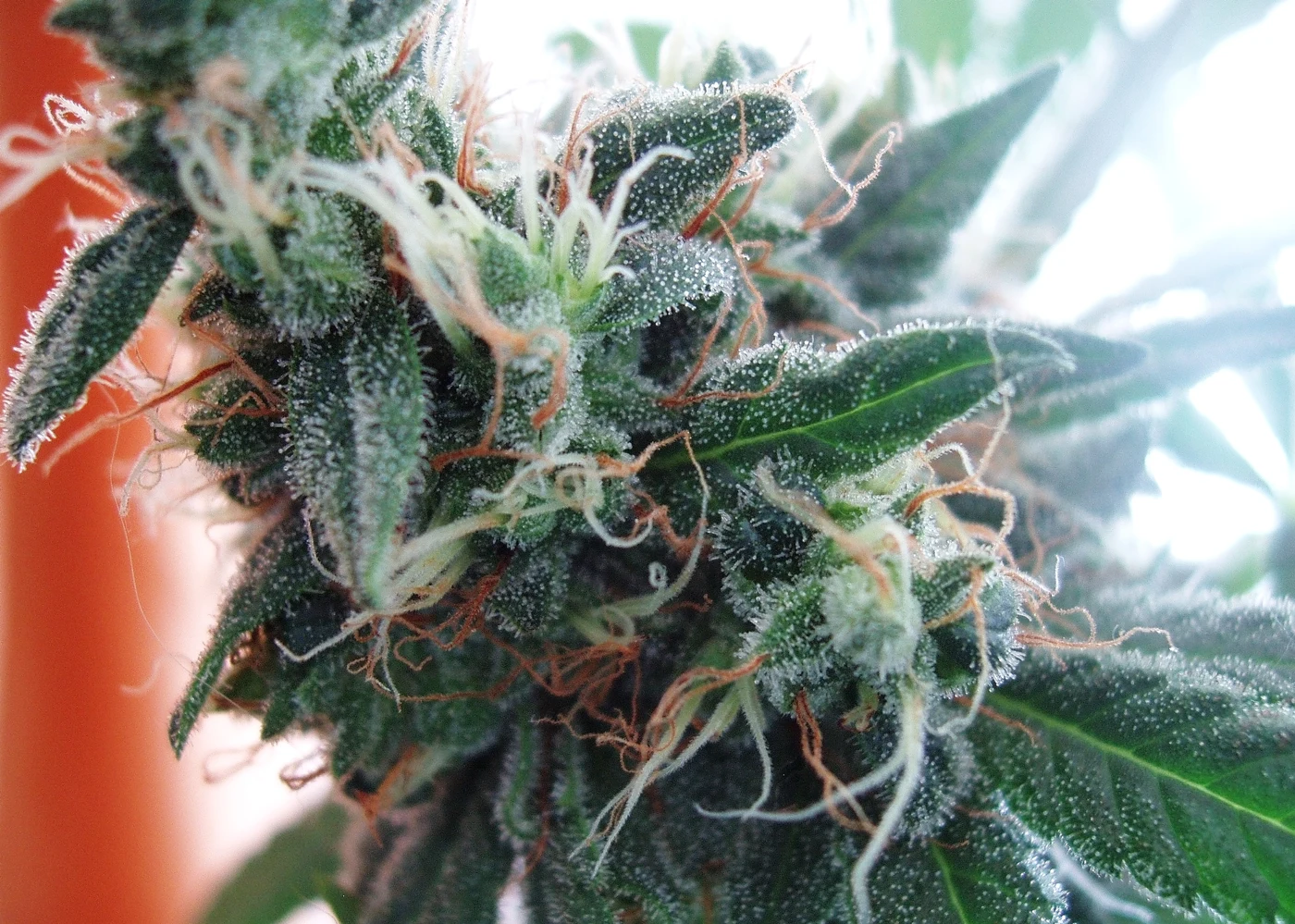
A flower is different from a leaf or an entire cluster of flowers. Naming the unit makes a description easier to follow.
Stigma, pistil and bract are not interchangeable words. They refer to different structures or levels of anatomy.
An image records an appearance at a particular scale and moment. Its caption should preserve those limits.
The stigma is the pollen-receptive part of the female reproductive structure. Descriptions of hair-like projections often refer to stigmas.
Pistil is a broader anatomical term involving the female reproductive structure. It should not automatically be reduced to the visible projections alone.
In informal cannabis descriptions, visible hair-like structures are often called pistils. A botanical account benefits from greater precision: the visible stigmatic part and the broader structure are not exactly the same subject. This is a vocabulary distinction, not a claim that a casual photograph reveals every internal part.
The surrounding bract is a different structure again. A caption that labels all parts with one familiar word may be easy to read but difficult to interpret. The developmental morphology literature provides a more specific vocabulary for describing the plant.
A close-up of one structure and a photograph of an entire plant provide different kinds of context. The close-up may show detail while leaving its position unclear. The wider view may show the subject as a whole while lacking the resolution needed for anatomical terms.
An inflorescence is a flower-bearing system or cluster, rather than simply a synonym for one flower. Keeping that level of description explicit helps a reader understand whether an account concerns an individual structure or a larger arrangement.
The same care applies to early. Early in which developmental process, and according to which record? A caption that describes a developing floral structure is more precise than an unsupported calendar-age label. This article does not attach a universal age or schedule to a visual feature.
A useful botanical image caption identifies the subject, the scale and the part being discussed. If the image is an illustration, that should also be stated. An illustration can teach a term without documenting a particular specimen.
Consider a fictional archive caption: “Detail of the labelled floral region; visible projections are described by the source as stigmas.” This sentence identifies both the visible subject and the attribution. It is different from claiming that an unrelated photograph has been independently identified or genetically assessed.
The opening photograph shows flowering material identified as White Widow by its source. It provides botanical context, but it does not document an early developmental stage. Its caption therefore gives the subject and credit without assigning an age to the image.
A cropped image may also omit context. That does not make it useless; it changes what it can show. A clear account says what is visible and leaves unobserved anatomy out of the description.
Research on cannabis floral morphology distinguishes expressed structures from broader sex-related descriptions. An anatomical observation therefore should not be silently expanded into a complete genetic assessment or a guarantee about every later observation.
A source might provide a category description, a photograph and a separate account of the material. Those records can complement one another, but they answer different questions. Preserving their roles is more useful than forcing them into one absolute statement.
The male and female cannabis terminology guide discusses the wider distinction. The feminized expectations article explains why a seed-category label and an individual observation are different claims.
If the question concerns pollen-bearing structures, read pollen sacs and floral anatomy. If it concerns seeds, read female plants and seed formation. Neither question is answered simply by recognizing the word female.
For young-plant vocabulary before the floral subject, return to the seedling knowledge guide. A seedling description and an early floral description concern different developmental subjects.
Questions, untangled
No. Stigma refers to the receptive part; pistil is a broader anatomical term. Informal usage often compresses the distinction.
No. They name different structures. A botanical caption should not substitute one term for the other.
Not by itself. It needs a developmental context and a source for any age attached to the image.
No. It shows flowering material as context. It is not presented as an early-stage or age-specific reference.
No. It records appearance. A genetic description is a separate kind of information.