What autoflower describes
A flowering-response characteristic is one part of a plant description. It is not a synonym for reproductive failure.
Field notes / A17 · The knowledge library
Can Autoflowers Produce Seeds? Reproductive Biology Explained
Yes. Autoflowering does not mean sterile. The label concerns flowering response, while seed formation belongs to reproductive biology. It does not promise that every individual will contain seeds, nor does it describe an inability to reproduce.
Explore the distinction ↘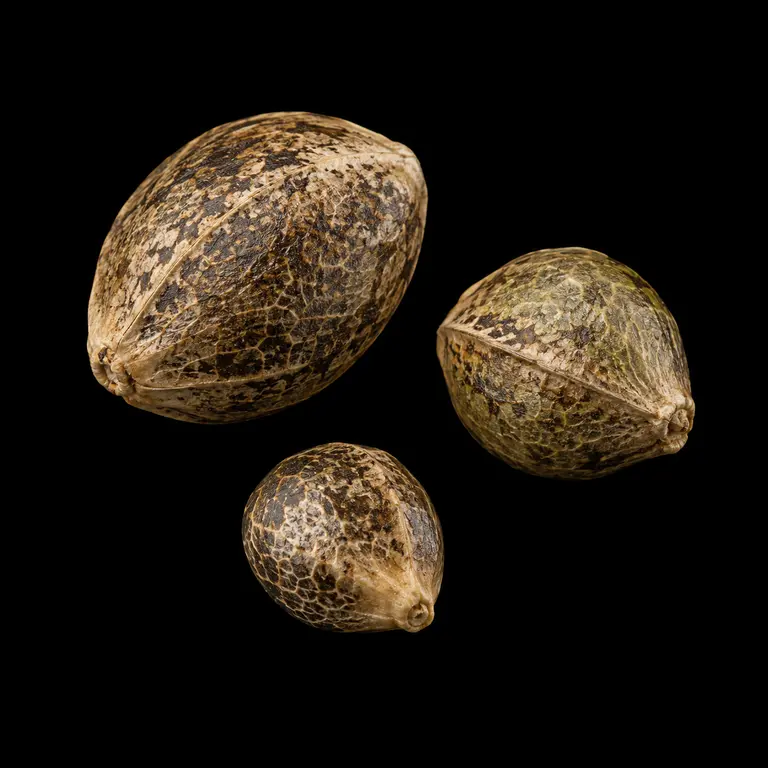
A flowering-response characteristic is one part of a plant description. It is not a synonym for reproductive failure.
Reproductive capacity concerns biological ability. The autoflower label does not itself remove that capacity.
An observation of seeds, or their absence, describes particular material. It is a different claim from a universal statement about a category.
The question “Can autoflowers produce seeds?” is about possibility. It does not ask whether a particular photographed flower contains seeds or whether every specimen will do so. Keeping the verb in view prevents a simple answer from becoming an unintended prediction.
Compare “this type can reproduce” with “this sample contained seeds.” The first is a category-level biological statement. The second is an observation tied to material. Neither sentence supplies all the information contained in the other.
A third claim, “this category is sterile,” would be stronger still. It describes an inability, rather than a missing observation. There is no reason to translate the word autoflower into that claim.
In the general botanical account, cannabis seed formation follows fertilization of an ovule, involving female reproductive structures and a pollen contribution. Flowering, pollination, fertilization and subsequent seed development are related concepts, but they name different events.
The 2022 Autoflower1 study reports seed-derived generations of material used to investigate flowering traits. For the narrow question here, that is evidence against interpreting autoflowering as universal sterility. It is not a guarantee about an arbitrary individual or lot.
Punja and Holmes also document seed formation in their research on cannabis floral morphology. Their findings provide broader context for why visible flower descriptions and reproductive events need precise vocabulary. This article uses that context to explain terms, without turning the experimental work into a practical procedure.
| Term | What it concerns |
|---|---|
| Flowering response | The relationship between flowering and developmental or environmental signals |
| Pollination | Pollen reaching a receptive floral structure |
| Fertilization | The reproductive event preceding ordinary seed development |
| Seed formation | Development of the resulting seed |
| Sterility | An inability to carry out a reproductive function |
Seedless describes the absence of seeds in the material being discussed. Sterile describes reproductive inability. The difference is between an outcome and a capacity. Using the terms interchangeably makes an observation sound like a biological diagnosis.
Imagine a museum label that says “no seeds observed in this specimen.” That wording tells visitors what was recorded. Rewriting it as “this category cannot form seeds” would require additional evidence. This fictional example illustrates the change in claim, rather than describing a particular cannabis specimen.
The scope of an observation matters too. A photograph, an examined flower and an entire documented sample do not offer identical coverage. A caption should say what is visible or what was assessed. It should not quietly turn a limited view into a universal conclusion.
Female identifies a sex-related description. Feminized concerns the expected female sex associated with a seed category. Autoflower concerns flowering response. None of these words is a replacement for an observation that a particular sample has no seeds.
It helps to read a description as several separate fields: identity, flowering category, sex-related category and observed features. A short phrase may populate only two of those fields. The remaining questions do not disappear because the phrase sounds complete.
For example, a fictional record reading “Example A; feminized autoflower; flower photographed” does not say that the pictured material was examined for seeds. Adding that conclusion would change the record. The useful response is to preserve the distinction, rather than infer an outcome from the category names.
For the sex-label question specifically, see are autoflower seeds always female? It explains why the combination of words does not make them synonyms.
A general explanation should give a direct answer and name the distinction behind it. A report of a particular event should identify its subject and describe what was observed. A research account should keep its conclusions connected to the material studied. These are complementary forms of explanation, each with its own scope.
When an article moves from “can” to “always,” it changes the question. When it moves from “not observed” to “impossible,” it changes the strength of the conclusion. Watching for those small language changes is more useful than collecting absolute slogans about a category.
The broader autoflower guide covers the flowering vocabulary. For a different question about actual seeds encountered in flower, read seeds in cannabis flowers. For the informal name attached to that discovery, see what bagseed means.
Questions, untangled
No. A flowering-response label does not describe an inability to reproduce. That is the central distinction behind the answer.
No. Biological capacity is not a statement that a particular outcome occurs in every individual. The words “can” and “always does” make different claims.
No. An absence of seeds in described material is an outcome. A claim about fertility or sterility concerns reproductive capacity and needs evidence appropriate to that question.
No. Feminized is a sex-related seed-category term, not a synonym for sterile or seedless. It answers a different question.
That is the usual informal discovery context of the word. It does not by itself identify the flowering category, sex category or complete ancestry of the seed.