Information detected by a plant
In seed research, light can act as an environmental cue. The question is how a biological system responds to that information, rather than simply whether an image looks bright.
Field notes / 13 · The knowledge library
Light and Cannabis Seed Germination: Understanding the Biology
Does a seed need light? That question combines several ideas: light as a signal, light as an energy source, and the developmental stage being discussed. This article separates those concepts and explains how to read germination research without turning another species’ result into a cannabis rule.
Explore the distinction ↘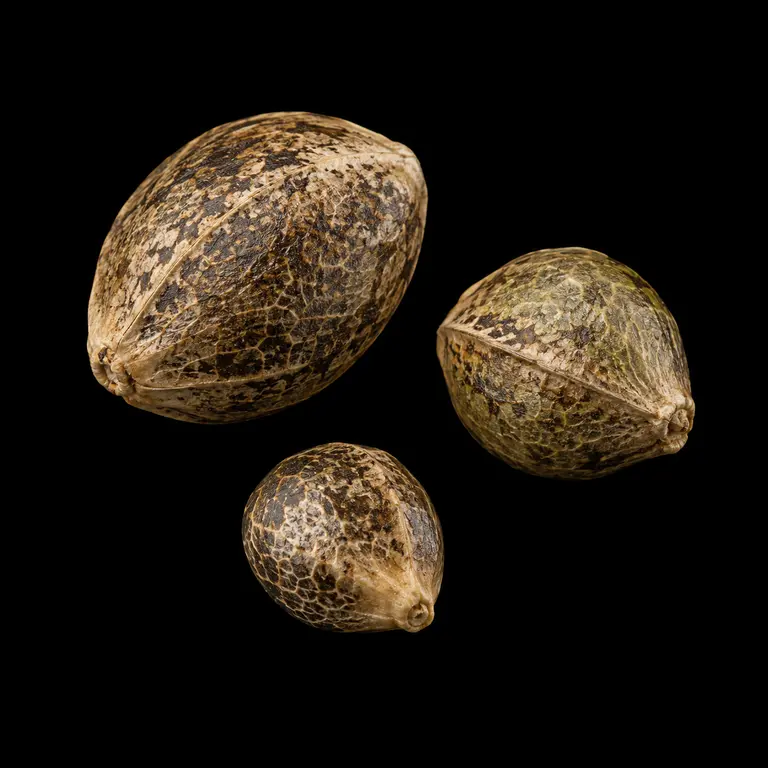
In seed research, light can act as an environmental cue. The question is how a biological system responds to that information, rather than simply whether an image looks bright.
Photosynthesis concerns the use of light energy. A statement about photosynthesis is not automatically an answer to a question about a germination cue.
Germination and later seedling development are distinct processes. A statement about one stage should not be silently applied to the other.
An article titled light and seeds may concern germination, seedlings, flowering or laboratory imaging. These subjects share vocabulary while asking different questions. Before interpreting a result, identify the process that the author investigated.
The word need can also mean different things. A source might be discussing whether a response occurred, how frequently it occurred, or whether a factor influenced the response. Required, influential and associated with are not interchangeable conclusions.
| Question | What it concerns |
|---|---|
| What detected the signal? | A sensory or signalling mechanism |
| What changed? | The measured response |
| Which stage? | The developmental context |
| Which species? | The biological subject |
| What does “need” mean? | The exact claim being made |
These distinctions are why this page does not translate general seed studies into a yes-or-no cultivation instruction for cannabis. It explains the concepts and the boundaries of the evidence.
A study using Arabidopsis thaliana investigated phytochromes, a family of light-sensing proteins, and found that light-related germination pathways also responded to temperature. Its central relevance here is the interaction between signals: the biological response was not described by a single isolated word.
Arabidopsis is the species in that experiment. The study supports an account of its signalling system; it does not, by itself, establish a treatment or requirement for cannabis. The species name is part of the result’s meaning, not an optional footnote.
Kew’s account of research on South African plants likewise emphasises differences in germination responses among species. The researchers reported surprising exceptions to expectations. That is a reason to retain biological context when reading a general claim about seeds.
Together, these sources support a reading principle: a broad topic can contain different responses. An explanation of a mechanism should not be mistaken for a universal rule applying to every seed-bearing plant.
Everyday language often compresses light into bright or dark. Scientific descriptions can distinguish the duration of exposure, the amount of light and its spectral composition. These are separate dimensions, so two sources using the word light may not describe equivalent observations.
The word quality has a specialised use in some light research: it may refer to spectral composition. It should not be read as a consumer rating such as good-quality lighting. Similarly, a duration is a time interval, not an amount of light by itself.
| Term | Plain meaning |
|---|---|
| Duration | How long an exposure or observation lasts |
| Spectrum | The distribution of wavelengths |
| Intensity | A measure of the amount of light, with defined units |
| Response | The biological observation being reported |
A complete scientific account identifies the variables relevant to its question. A short caption may omit them for brevity. That does not make the caption a complete substitute for the underlying study.
A photograph introduces another distinction. Its apparent brightness depends on how it was recorded and displayed. A bright-looking image does not supply the measurements described in an experiment.
Seed physiology commonly uses emergence of the embryonic root as a germination milestone. An image of an established leafy seedling shows later development. Both can appear in an educational article, but they should not be treated as pictures of an identical endpoint.
This matters when one source discusses a seed response and another discusses a green plant. A reader can correctly understand both sources and still make an incorrect comparison if the stage changes unnoticed.
Consider a fictional museum sequence showing an unopened object, its opening and its final assembled form. The images tell a continuous story, but each depicts a different event. A caption about the assembled object cannot explain every earlier transition on its own.
Our germination knowledge guide defines the stage vocabulary. The companion article on temperature terminology explains another variable discussed in seed research. Neither page turns these conceptual descriptions into a cultivation procedure.
Questions, untangled
No. A signal affecting a developmental response and energy used in photosynthesis are different biological ideas.
No. Its species and experimental scope need to remain attached to the findings. Applying a result to another species is an additional claim.
No. In research it can refer to spectral composition. The source’s definition matters.
Not by appearance alone. A photograph’s brightness is not a substitute for a documented measurement.
The central germination guide explains embryo, radicle and seedling terminology and how timing claims are framed.
The wider context
Explore the central cannabis seed knowledge guide for an overview of biology, labels and related reading.