Regular
A seed-type description
Field notes / T04 · Knowledge library
Regular CBD combines a seed-type description with a composition-related description. The two terms belong to different parts of an account. Understanding that separation helps readers avoid assigning chemical meaning to a seed-type label or reading a broad category as an individual result.
Explore the concepts ↘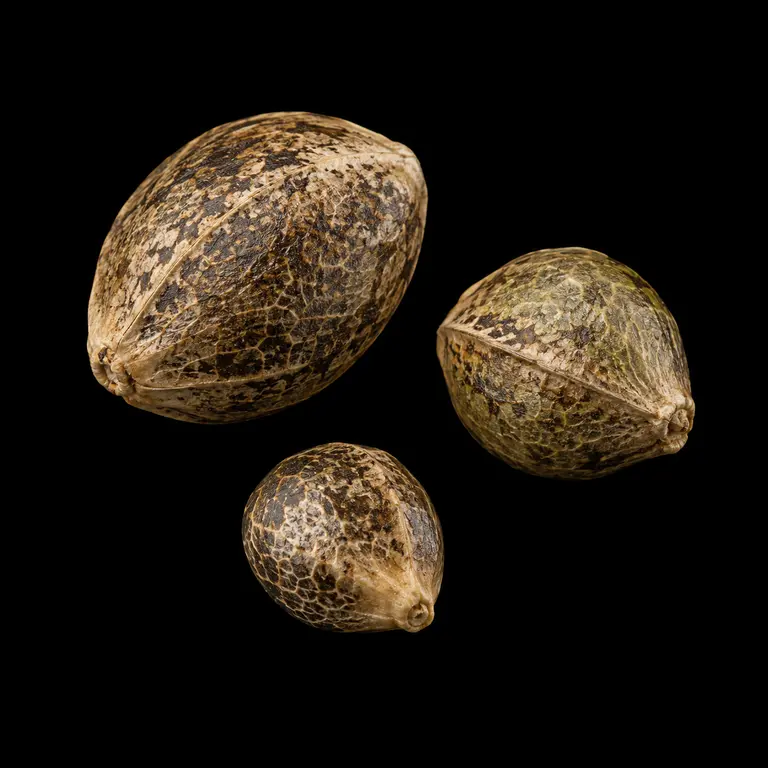
A seed-type description
A profile-related description
The source behind each statement
Within seed-category language, regular is contrasted with feminized. CBD belongs to a different vocabulary concerned with chemical profiles. Neither term should silently become the definition of the other when the words appear together.
The distinction can be made without inventing numerical guarantees. A category description tells the reader how the source classifies its subject. It does not automatically establish an exact distribution of characteristics in particular material or a laboratory result for every item carrying the description.
A statement about a category and a statement about an identified individual operate at different levels. Moving from one to the other requires additional information. A neat label does not remove that gap merely because it appears alongside a photograph.
For example, a fictional archive might record a source’s seed-type label in one field and its profile description in another. Those entries document the description. They should remain recognisable as source-supplied information, rather than being rewritten as observations made by the archive itself.
Sawler and colleagues’ research illustrates why strain names should not be treated as sufficient evidence of genetic identity. A familiar name, a regular label and a CBD descriptor can coexist without collectively proving everything about the material.
Each piece of information has a role. The name helps locate the record; the category explains the source’s classification; an analysis would address the sampled material. Combining the words in a title is convenient for navigation but should not merge those evidential roles.
A useful entry separates identity, seed-type terminology and chemical-profile wording. If a field is not documented, a related field should not be used to manufacture an answer. This makes a short description more useful than a paragraph filled with assumptions.
This guide focuses on that reading method. It offers no production method, sex-selection procedure or variety recommendation. The broader feminized-versus-regular discussion in the knowledge library explains the category vocabulary; the CBD label guides explain the separate language of composition.
Questions, untangled
No. It is not a chemical measurement.
No. It concerns a different part of the description.
No. Category-level wording and individual observations should remain distinct.
No. A name does not replace the records needed for particular claims.
No. It explains the language used in a combined description.